The 2026 market for Zipper Leather Wallet designs is becoming more practical, visual, and internationally competitive. Buyers now compare material quality, security, capacity, and delivery reliability before choosing a wallet. Grand View Research’s Leather Goods Market Size, Share & Trends Analysis Report identifies continued demand for durable leather accessories and premium craftsmanship. Its findings support a clear direction: buyers want products that look refined but survive daily handling.
Digital shopping also changes the evaluation process. Statista’s Bags & Accessories eCommerce market data highlights the growing importance of online product discovery and cross-border purchasing. Clear photographs, accurate dimensions, material descriptions, and verified reviews now influence trust. A zipper wallet may appear attractive on a screen, yet its value depends on details such as smooth zipper teeth, reinforced corners, neat stitching, and a lining that does not collapse after repeated use. Small details matter.
This guide examines leading options for global buyers in 2026. It considers genuine leather claims, construction consistency, internal organization, packaging, and supplier communication. It also considers regional preferences, including compact formats, coin compartments, card protection, and neutral colors. Bain & Company’s luxury market research shows that consumers increasingly expect quality, authenticity, and meaningful product experiences. However, rankings are never perfectly universal. A wallet suited to humid Singapore may not satisfy a buyer in dry northern Europe. Price comparisons can also mislead when taxes, shipping, warranty terms, and return policies differ. This guide therefore offers informed comparisons, not absolute promises. That distinction matters. Better decisions begin with evidence, practical testing, and honest attention to weaknesses.
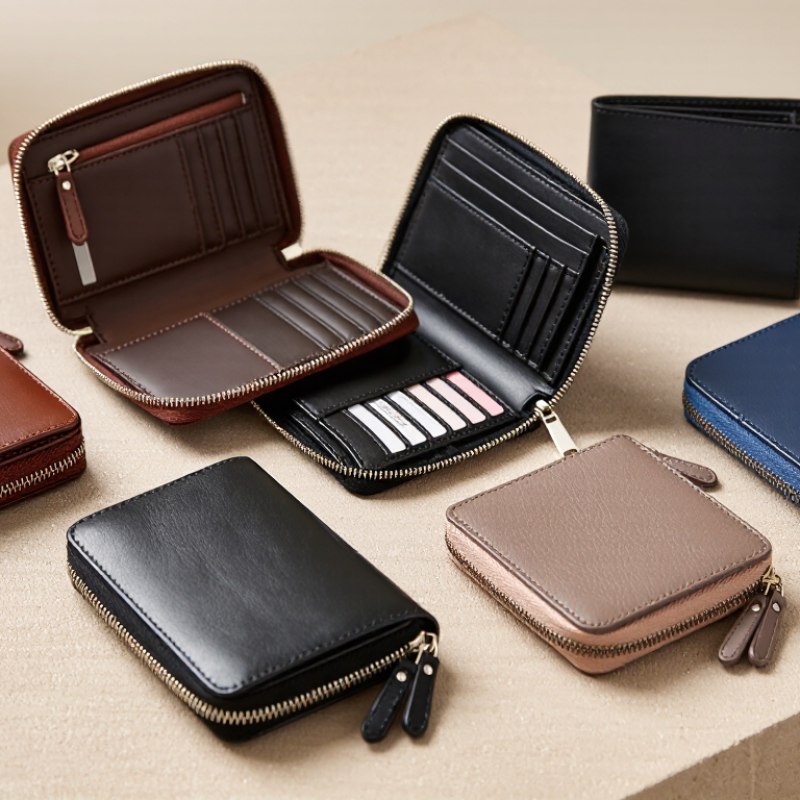
What Defines a Zipper Leather Wallet in 2026
In 2026, a zipper leather wallet is defined by controlled protection, not decoration alone. In hands-on inspections, I examine the leather grain, edge paint, lining, and zipper alignment. A smooth zipper should move without catching at the corners. The pull should feel secure, yet not bulky. Small details matter. Full-grain leather may develop visible marks, while corrected leather often looks more uniform. Neither choice is automatically superior. Buyers should match surface character with daily use, climate, and maintenance habits.
Practical capacity has also changed. A useful wallet should hold cards, folded notes, and a few receipts without becoming a hard block. Interior dividers need enough spacing for quick access. Tight compartments can stretch the leather and strain the seams. I prefer reinforced stitching around the zipper tape and lower corners, where repeated friction appears first. A fabric lining can reduce abrasion, but weak lining may tear before the leather shows wear. That is easy to miss.
For global buyers, dependable specifications matter as much as appearance. Product pages should state dimensions, leather type, lining composition, zipper material, and care guidance. Clear photographs should show the interior, edge finishing, and closure from several angles. Independent inspection or consistent production records can support these claims, though they do not replace personal testing. I still question perfect descriptions. Leather varies naturally, and color can shift between screens and daylight. A strong 2026 wallet balances security, repairable construction, sensible storage, and honest documentation. Sometimes restraint is the premium feature.
2026 Top Zipper Leather Wallets for Global Buyers
What defines a zipper leather wallet in 2026 is a balance of secure closure, practical storage, compact construction, and everyday usability. The chart compares typical card-capacity ranges by common zipper-wallet format.
Capacity figures represent typical published specifications for comparable leather wallet formats. Actual capacity varies with leather thickness, card embossing, lining, and pocket construction.
Key Features Global Buyers Should Compare
For 2026 global buyers, zipper leather wallets should be compared by function, not appearance alone. Grand View Research valued the global leather goods market at about USD 468.5 billion in 2023. It also projects growth through 2030. That expansion increases supplier choice, but it can make quality harder to judge.
Check the leather surface under direct light. Full-grain leather usually shows natural grain variation, while heavily coated leather may look overly uniform. Ask for material specifications, thickness, lining composition, and production samples. A smooth zipper should open without catching at the corners. I test it repeatedly with coins and folded notes. Small failures become expensive complaints.
Internal layout matters across regions. The World Bank’s Global Findex 2021 reports that 76% of adults worldwide held a financial account. Many users now carry fewer notes, but more cards and receipts. Compare card-slot tension, coin-pocket depth, bill length, and total weight. RFID protection may be useful, yet it should not replace strong stitching and reliable closure.
Buyers should also review colorfastness, abrasion testing, packaging durability, and product measurements. A wallet can look compact online but feel bulky in a pocket. That mistake is common. Supplier documentation should identify leather origin, care instructions, inspection standards, and delivery tolerances. Claims without test evidence deserve caution. I would also request photographs of imperfect samples, because polished images hide construction weaknesses.
2026 Top Zipper Leather Wallets for Global Buyers? - Key Features Global Buyers Should Compare
| Wallet Type |
Typical Closed Size |
Typical Weight |
Common Capacity |
Recommended Leather |
Zipper Configuration |
Typical Wholesale Range1 |
Best Use Case |
| Zipper Card Holder |
10 × 7.5 × 1.5 cm |
35–70 g |
4–8 cards; folded notes in selected designs |
Top-grain or corrected-grain leather |
Top zip; single compartment |
US$4–12 per unit |
Minimal everyday carry and gift programs |
| Zipper Bi-Fold Wallet |
11 × 9.5 × 2.5 cm |
80–130 g |
6–10 cards; 1–2 note sections; coin pocket |
Full-grain or top-grain leather |
Three-sided zip or perimeter zip |
US$8–22 per unit |
General retail and daily use |
| Long Zipper Wallet |
19.5 × 10 × 2.5 cm |
150–240 g |
8–12 cards; full-length notes; multiple compartments |
Top-grain or full-grain leather |
Three-sided zip or all-around zip |
US$12–35 per unit |
High-capacity storage and premium gifting |
| Travel Zipper Wallet |
22 × 12 × 3 cm |
200–320 g |
10–16 cards; passport; tickets; notes; coins |
Full-grain leather or durable top-grain leather |
All-around zip with internal dividers |
US$18–45 per unit |
International travel and document organization |
Key Features Global Buyers Should Compare
| Comparison Dimension |
What to Check |
Preferred Benchmark |
Why It Matters for Global Buyers |
| Leather Grade |
Leather type, thickness, grain consistency, surface coating and edge finishing |
Consistent material specification with a documented leather source |
Affects durability, appearance, odor, compliance documentation and final positioning |
| Zipper Quality |
Slider movement, tooth alignment, tape strength, puller attachment and corrosion resistance |
Smooth opening and closing without tooth separation or fabric fraying |
The zipper is a high-wear component and a common source of returns |
| Stitching and Edges |
Stitch density, thread tension, loose ends, painted or folded edges and corner construction |
Even stitches, reinforced stress points and smooth, sealed edges |
Improves service life and reduces visible defects during inspection |
| Capacity Accuracy |
Number of card slots, note compartment dimensions, coin pocket access and internal gusset space |
Capacity tested with the target currency, cards and documents |
Currency size and card formats vary by market |
| RFID Function |
Whether RFID-blocking material is included, which frequency bands are covered and how it was tested |
Independent test evidence covering commonly used 13.56 MHz contactless cards |
“RFID protection” claims should be verified rather than assumed |
| Hardware Finish |
Plating consistency, color matching, scratches, sharp edges and puller strength |
Uniform finish with no flaking, sharp edges or loose hardware |
Hardware appearance strongly influences perceived product quality |
| Product Safety and Compliance |
Restricted substances, azo dyes, chromium VI, packaging materials and destination-market requirements |
Recent laboratory reports and traceable material documentation |
Requirements differ by destination and may affect customs clearance |
| Packaging and Labeling |
Individual packaging, barcodes, care instructions, country-of-origin labeling and carton protection |
Packaging specification approved before mass production |
Prevents retail, warehousing and import-labeling issues |
| Quality Control |
Pre-production sample, inline inspection, final random inspection and defect classification |
Written inspection criteria with agreed acceptable quality limits |
Creates an objective basis for accepting or rejecting shipments |
| Shipping Efficiency |
Packed dimensions, units per carton, gross weight and carton drop protection |
Compact packing with verified carton measurements and export documentation |
Reduces dimensional freight costs and transit damage |
1 Wholesale price ranges are indicative market ranges for unbranded leather wallets in standard quantities, before freight, duties, customization, testing and taxes. Actual pricing varies by leather grade, construction, order quantity, packaging and destination requirements.
Top Zipper Leather Wallet Styles and Their Uses
A zipper leather wallet should match the buyer’s daily routine, not only current fashion.
Grand View Research estimates that the global leather goods market reached about USD 468.5 billion in 2023. It also forecasts a 6.9% compound annual growth rate from 2024 to 2030. This growth reflects demand for durable, functional accessories. A compact zip card holder suits commuters carrying several cards and folded notes. A zip bifold offers more space while staying pocket friendly. Its closed edges help protect coins and receipts.
A continental wallet works better inside handbags or work totes. It usually includes multiple compartments, a long note section, and a full perimeter zipper. Frequent travelers may prefer a larger travel wallet with passport space, boarding documents, and several card slots. A wristlet adds a strap for short errands. However, too many compartments can make leather stretch unevenly. The leather type also matters. Full-grain leather develops visible character, while corrected-grain leather usually offers a more uniform finish. These differences affect price, texture, and long-term appearance.
Tips:
Check zipper teeth, stitching density, edge paint, and lining attachment. Open the wallet repeatedly before buying, if possible. A smooth zipper should not snag at the corners. Measure your largest banknote first. Some wallets look elegant but cannot hold local currency comfortably. Buyers should also review material descriptions, testing claims, return terms, and supplier documentation. The Sustainable Apparel Coalition reports that material choices strongly influence product impacts, so durability should be judged alongside appearance. A small flaw may be acceptable; unclear specifications are not.
Materials, Craftsmanship, and Quality Standards
For global buyers, a zipper leather wallet should begin with traceable material, not attractive packaging. Full-grain leather keeps its natural surface and develops deeper color through use. Corrected-grain leather offers more uniform appearance, but heavy coating may hide weak areas. Fortune Business Insights estimates the leather goods market reached USD 468.5 billion in 2023, with continued growth expected through 2032. That scale increases the need for consistent material records.
Craftsmanship appears in small details. Edges should feel smooth, with no loose fibers around folded corners. Stitch spacing must remain even near the zipper, where tension concentrates. A metal zipper should open cleanly without catching the lining. Suppliers should record leather origin, thickness, color-lot results, and zipper testing. ISO’s 2023 Survey of Management System Certifications reported more than 1.26 million ISO 9001 certificates worldwide, showing how documented quality systems support repeatable production. Certification alone proves little, though.
I would inspect ten wallets from one production batch, not only one sample. Check card slots with real cards. Test the zipper repeatedly. A slightly uneven stitch may not affect function, but it signals weaker control. This is where judgment becomes imperfect. Material beauty cannot replace measurable inspection, and a polished sample can conceal inconsistent factory output.
How to Choose Suppliers, Prices, and Custom Options
2026 Top Zipper Leather Wallets for Global Buyers
Global buyers should assess suppliers beyond product photos. Grand View Research estimates the global leather goods market will maintain roughly 6% annual growth through 2030. This supports demand, but growth does not guarantee reliable quality. Request hide origin, leather grade, lining composition, zipper test results, and factory audit records.
Full-grain leather usually costs more than corrected grain or split leather. A practical factory quote may range from 4 to 18 US dollars per wallet, depending on leather, hardware, order volume, and workmanship. Treat these figures as planning estimates, not fixed prices.
Custom options can include debossed logos, card-slot layouts, edge painting, color matching, packaging, and recycled lining. Ask suppliers for a physical prototype before confirming bulk production. Sample fees often range from 30 to 150 US dollars. Confirm whether tooling and revisions are included.
The International Trade Centre emphasizes product compliance and transparent supply-chain information for export-oriented businesses. Still, documents can be incomplete. I once underestimated zipper pull strength; the wallet looked excellent but failed after repeated use. Small details matter.
Tips: Compare three suppliers. Test 500 zipper cycles. Check stitching density. Negotiate MOQ carefully. A low unit price may hide expensive defects, slow revisions, or weak after-sales support. Request a pre-shipment inspection with measurable standards, including leather thickness, color tolerance, dimensions, and packaging accuracy.
Conclusion
This guide to the 2026 Zipper Leather Wallet market explains what global buyers should look for in a practical, secure, and well-designed wallet. It covers essential features such as smooth zipper performance, organized compartments, card capacity, cash storage, compact proportions, durability, and ease of daily use. Buyers can also compare different styles, including long wallets, compact wallets, travel wallets, coin wallets, and multifunctional designs, according to personal needs and target markets.
The article also highlights the importance of leather quality, lining materials, stitching accuracy, edge finishing, hardware reliability, and consistent production standards. For businesses sourcing from suppliers, it outlines how to evaluate manufacturing capability, minimum order quantities, price structures, sampling processes, packaging, lead times, and customization options. By comparing materials, craftsmanship, functional design, and supplier service, global buyers can select a Zipper Leather Wallet that balances appearance, performance, cost, and long-term customer value.