
Choosing the Best China Tri Fold Leather Wallet Manufacturer requires more than comparing prices. The right partner must balance leather quality, construction accuracy, production capacity, and reliable communication. A well-made Tri-Fold Leather Wallet should open smoothly, protect cards firmly, and remain comfortable in a trouser pocket. Small details matter, including folded-edge finishing, stitch spacing, lining strength, and the placement of the coin pocket.
Industry data supports careful supplier evaluation. Grand View Research identifies leather goods as a growing global market, supported by demand for durable and premium accessories. Statista Market Insights also reports steady consumer spending across bags, wallets, and related leather products. These figures suggest opportunity, but they do not prove that every factory can deliver consistent quality. Capability must be verified through samples, factory records, and production evidence.
Look closely. Not just at polished photos.
Professional manufacturers should explain leather grading, thickness tolerance, color matching, hardware testing, and packaging controls. Certifications such as ISO 9001 can indicate structured quality management, although certification alone is not enough. Buyers should request inspection reports, material documentation, and clear pre-production samples. The Leather Working Group’s guidance also makes responsible leather sourcing an increasingly important consideration for international brands.
No supplier is perfect. A low quotation may hide weaker leather or unstable stitching. Even experienced buyers can miss small defects during the first order. Therefore, this guide compares Chinese manufacturers through practical criteria, including craftsmanship, customization, delivery performance, compliance awareness, and after-sales support. The goal is not simply to find the cheapest factory. It is to identify a dependable manufacturing partner for long-term wallet production.
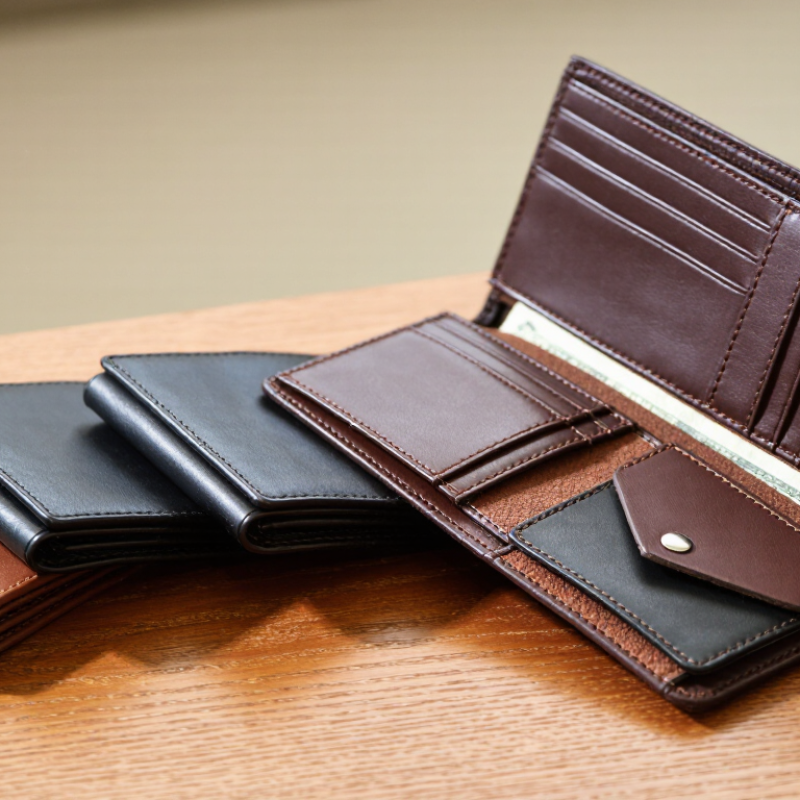
A high-quality tri-fold leather wallet manufacturer in China proves control through details, not promises. During factory evaluations, I check leather traceability, edge finishing, stitch density, and fold recovery. A wallet should close flat after repeated use. Its corners should not crack after bending. The Leather Naturally industry platform reports that more than 1.5 billion hides and skins enter the global supply chain annually. This makes material selection and traceability essential. Ask whether the leather is full-grain, corrected-grain, or split leather. These terms affect durability, texture, and price.
Production consistency matters just as much. The manufacturer should use approved samples, documented inspection points, and measurable tolerances. Independent quality research commonly recommends AQL-based sampling for mass production. However, sampling alone cannot reveal every hidden weakness. A supplier should test card-slot tension, lining adhesion, moisture resistance, and hardware corrosion. Grand View Research valued the global leather goods market at over USD 400 billion in 2023, showing why reliable capacity matters. Yet large capacity does not guarantee careful workmanship. That is an uncomfortable truth.
Tips: Request a pre-production sample and a third-party inspection. Check ten wallets from different cartons. Compare leather grain, logo placement, thread tension, and fold alignment. Small differences matter. Also, allow room for honest material variation. Natural leather is not plastic. A slightly uneven grain may be acceptable, but loose edges are not. Review corrective-action records, not only polished factory photographs. A manufacturer that admits recurring problems may be more trustworthy than one claiming perfection.
Best China Tri Fold Leather Wallet Manufacturer?
Choosing a reliable China tri-fold leather wallet manufacturer starts with material verification. Full-grain leather keeps natural markings and usually develops a deeper finish with use. Top-grain leather offers a smoother surface and more consistent color. Split leather can reduce cost, but its coating may crack sooner. Ask for a material sample before approving bulk production. Check the edge, grain, smell, and flexibility by hand.
Craftsmanship appears in the small details. Skilled workers align the three folded sections carefully, preventing uneven gaps when the wallet closes. Strong polyester thread supports repeated opening and folding. Even stitches should remain tight, with no loose ends around card slots. Edge paint needs several thin layers, gentle sanding, and enough drying time. A rushed edge often feels rough within months. Not every smooth wallet is durable.
Hardware also deserves practical testing. Snap buttons should close firmly without damaging the leather. Card pockets must hold cards securely but release them without force. A useful factory inspection includes folding tests, stitch checks, color comparison, and measurement records. Ask how workers handle rejected pieces. Honest answers matter. No workshop is flawless. I would still question any supplier promising zero defects, because real production needs inspection, correction, and clear communication.
| Production Dimension | Common Material | Typical Technical Data | Craftsmanship and Quality Considerations |
|---|---|---|---|
| Main Exterior Leather | Full-grain or top-grain cowhide | Usually 0.9–1.4 mm before lamination and reinforcement; vegetable-tanned or chrome-tanned options are available. | Full-grain leather retains the natural grain surface and develops a patina over time. Top-grain leather is lightly corrected for a more uniform appearance. Leather should be checked for consistent thickness, surface defects, and color stability. |
| Interior Leather and Pocket Panels | Split leather, corrected-grain leather, or thin cowhide | Commonly 0.5–0.9 mm to reduce bulk while maintaining structure. | Panels are skived along folded edges and pocket openings so that the finished wallet closes neatly without excessive thickness. |
| Lining Material | Polyester, cotton, or microfiber fabric | Lightweight woven lining is typically selected for low moisture absorption, color consistency, and abrasion resistance. | The lining should be bonded or stitched evenly, with no loose fibers, wrinkles, exposed adhesive, or separation at the fold points. |
| Reinforcement Layer | Nonwoven fabric, leather board, or thin polymer sheet | Often positioned between leather layers to improve shape retention while limiting overall thickness. | Reinforcement must be accurately die-cut and positioned so that the wallet remains flat, the center fold operates smoothly, and card pockets do not deform. |
| Thread | Bonded polyester or nylon thread | Common thread sizes range from approximately 0.4–0.8 mm, depending on the design and stitch density. | Bonded thread offers good resistance to abrasion and fraying. Stitch lines should be straight, evenly tensioned, and securely back-tacked at stress points. |
| Stitching Method | Machine stitching or hand saddle stitching | Typical stitch density is about 3–5 stitches per centimeter for compact leather goods, subject to leather thickness and design. | Machine stitching supports consistent production efficiency, while saddle stitching can provide strong independent thread runs. Corners should be clean, with no skipped stitches or thread loops. |
| Edge Treatment | Painted, folded, burnished, or turned leather edges | Edges may receive multiple thin coats of edge paint, with drying and sanding between coats where required. | A quality edge should feel smooth and uniform, without cracking, bubbling, rough fibers, or visible color variation. Folded edges require accurate skiving to prevent bulky corners. |
| Card Slot Construction | Layered leather or leather-and-lining assembly | A typical tri-fold design may include 6–12 card slots, depending on the required capacity and final folded thickness. | Slot openings should remain parallel and easy to access. Pocket layers need precise alignment to prevent cards from slipping out or becoming difficult to remove. |
| Bill Compartment | Leather-lined or fabric-lined currency compartment | The compartment is generally designed to accommodate standard banknotes without excessive bending; exact capacity depends on wallet dimensions. | The interior must be free from sharp adhesive edges and loose lining. The center fold should open sufficiently for convenient access while retaining a compact closed profile. |
| Closure and Hardware | Brass, zinc alloy, stainless steel, or snap-button components | Hardware may include a snap closure, metal corner detail, or decorative fastener; plating and coating are selected according to the target finish. | Hardware should be securely attached, smoothly plated, and free from sharp edges. Snap buttons should open and close consistently without damaging the leather. |
| Leather Surface Finish | Aniline, semi-aniline, pigment, wax, or oil finish | Finish selection affects appearance, tactile feel, stain resistance, color depth, and the visibility of natural grain. | The finished surface should show consistent color and sheen while retaining the intended leather character. Samples should be checked for rub-off, color migration, and coating adhesion. |
| Folding Performance | Skived leather with flexible center reinforcement | The center fold is typically thinned or scored to support repeated opening and closing without excessive resistance. | The wallet should fold symmetrically, remain stable when closed, and show no premature creasing, cracking, or delamination after repeated flexing. |
| Dimensional Accuracy | Cut leather panels and precision templates | Panel dimensions and stitch allowances are controlled according to the approved technical drawing; tolerances should be agreed before production. | Accurate cutting ensures aligned pockets, even edges, and a balanced three-section structure. Production samples should be compared with approved reference samples. |
| Adhesive Application | Water-based or solvent-based leather adhesive | Adhesive is used for positioning and lamination before stitching; the selection depends on leather type, lining, and production process. | Adhesive should be applied evenly and remain invisible after assembly. Excess glue, hard spots, seepage, and weak bonding are common defects requiring inspection. |
| Quality Inspection | Visual, dimensional, functional, and material checks | Inspection commonly covers leather appearance, seam quality, hardware function, pocket capacity, fold alignment, and surface cleanliness. | A practical inspection process uses approved samples, production specifications, and defined acceptance criteria. Random sampling and 100% visual checks may be combined for finished wallets. |
| Packaging Protection | Paper insert, dust bag, protective tissue, and carton packaging | Packaging should prevent scratches, moisture exposure, deformation, and hardware contact during storage and transportation. | Wallets should be packed in their natural folded position without excessive compression. Packaging materials should be dry, clean, and suitable for long-distance shipment. |
A reliable Chinese tri-fold leather wallet manufacturer begins with a clear design brief. Experienced teams ask for leather grade, thickness, fold direction, pocket count, stitching color, and target dimensions. They convert sketches into a technical file with measurements and tolerance notes. This prevents a beautiful drawing from becoming a bulky wallet. A practical sample should open smoothly, hold cards securely, and remain comfortable in a trouser pocket. Small details matter. Edge paint can crack if the fold is too tight.
Custom branding requires more than placing a logo on leather. Manufacturers usually compare debossing, foil stamping, screen printing, metal emblems, and woven labels. The best method depends on leather grain, order quantity, heat resistance, and visual depth. During sampling, production teams test logo size, pressure, temperature, and position. A one-millimeter shift can change the entire appearance. Buyers should request a physical sample, not rely only on digital artwork. Color cards and approved reference pieces improve repeat-order consistency. Still, matching color perfectly is difficult across different leather batches.
Quality control should cover cutting, stitching, edge finishing, lining, hardware, and packaging. Inspectors can measure fold symmetry, check loose threads, and test repeated opening and closing. Manufacturers with export experience can explain material documentation, labeling needs, and destination-market requirements. Communication is part of reliability. A shared approval sheet reduces confusion between designer, factory, and inspector. Mistakes still happen. I once underestimated how a thicker lining would reduce pocket capacity. That lesson changed the sampling process: test the wallet filled, folded, and carried, not merely photographed. A capable partner accepts revisions and records them clearly before mass production.
Best China Tri Fold Leather Wallet Manufacturer?
Choosing the best China tri fold leather wallet manufacturer requires more than reviewing polished samples. Ask how quality is measured every day. A reliable factory should inspect leather thickness, grain consistency, moisture, and surface marks before cutting. Production teams should also test stitching strength, edge paint adhesion, fold endurance, and colorfastness. Small details matter. A loose thread can become a customer complaint.
Certifications deserve careful checking. Request current copies of ISO 9001, leather chemical compliance reports, and social or environmental audit records when relevant. Verify the certificate scope, issuing body, factory address, and expiry date. A certificate alone proves little if it covers another facility. Production standards should include documented work instructions, trained inspectors, batch traceability, and final inspections based on an agreed AQL level. Independent pre-shipment inspections can reveal defects that factory photos miss.
Tips: Order a production sample, not only a showroom sample. Rub the leather with a dry cloth, load each card slot, and fold the wallet repeatedly. Check whether the lining wrinkles or the snap weakens. Ask for inspection photos and defect records from several batches. This is often more useful than impressive claims. Still, no system is perfect. Even experienced factories may miss uneven edge coating or slight color variation, so your specification should define acceptable limits clearly.
Quality Control, Certifications, and Production Standards to Evaluate
This practical evaluation framework gives the greatest weight to quality control and material compliance. When assessing a manufacturer, request inspection records, leather and hardware test reports, documented corrective actions, traceability records, and valid certificates such as ISO 9001 where applicable. The percentages are recommended evaluation weights, not company-specific results.
Choosing the best China tri-fold leather wallet manufacturer requires more than comparing quotations. Check the factory’s production experience, leather knowledge, and quality-control process. Ask whether the leather is full-grain, top-grain, or split leather, and request written material specifications. Reliable manufacturers can explain thickness, finish, lining, thread size, and hardware composition clearly. Their answers should match the samples.
Request a pre-production sample before confirming bulk manufacturing. Examine fold alignment, card-slot tension, edge painting, stitching density, and pocket recovery after repeated use. A practical factory should provide inspection records, production photos, and realistic lead times. I once focused too heavily on a low sample price and overlooked weak edge finishing. That decision required revisions later. It was a useful reminder: low cost does not always mean good value.
Tips: Visit the factory remotely or in person, and speak with the production manager. Confirm minimum order quantities, sample fees, packaging details, and defect-handling procedures. Ask for third-party material or product testing when appropriate. Review the manufacturing agreement carefully, including tolerances and delivery terms. Avoid suppliers who promise perfect results without discussing limitations. Honest communication is often a stronger reliability signal than polished sales language. Check whether the same specifications remain consistent across repeated samples and production batches.
Inspect leather thickness, grain consistency, moisture, and visible surface marks. Small defects can become customer complaints.
Ask for stitching strength, edge-paint adhesion, fold endurance, and colorfastness tests. Test each card slot and fold repeatedly.
Request current certificates and check the scope, issuing body, factory address, and expiry date. A certificate alone proves little.
Look for documented work instructions, trained inspectors, batch traceability, and final inspections using an agreed AQL level.
A showroom sample may hide production differences. Load the pockets, rub the leather, and fold the sample repeatedly.
Check fold alignment, card-slot tension, stitching density, lining wrinkles, edge coating, and snap strength. Touch matters.
Compare leather knowledge, written material specifications, inspection records, lead times, and repeated sample consistency.
Confirm minimum order quantities, sample fees, packaging, delivery terms, and defect-handling procedures in writing.
Be cautious with perfect promises. Even experienced factories may miss slight color variation or uneven edge coating.
Do not focus only on the lowest sample price. I once overlooked weak edge finishing, and revisions followed.
Choosing the best China Tri-Fold Leather Wallet manufacturer requires more than comparing prices. A reliable supplier should demonstrate strong material selection, skilled craftsmanship, consistent stitching, durable hardware, and careful edge finishing. High-quality leather or responsibly sourced alternatives, accurate cutting, and precise folding are essential for creating a wallet that is functional, attractive, and long-lasting. Manufacturers should also be able to support custom colors, compartments, logos, packaging, and other design requirements while maintaining clear communication throughout development and production.
Before placing an order, buyers should review samples, production capabilities, quality-control procedures, and relevant certifications. A dependable manufacturer will use documented inspection standards, monitor materials and workmanship, and provide transparent sampling, lead-time, and pricing information. Evaluating factory experience, customization flexibility, production capacity, and after-sales communication can help buyers identify a suitable Tri-Fold Leather Wallet partner for their target market and build a stable, professional supply relationship.

Send your design, quantity and destination — our export team responds within one business day.