
Leather Goods Manufacturer & Exporter Since 1995 · Shipping to 50+ Countries · GST 07AGXPK0652P1ZN
+91-98103-67695 [email protected]
0%

Choosing an RFID Leather Wallet is not simply a style decision. It involves material quality, pocket design, RFID performance, and daily comfort. A wallet should feel secure in your hand, slide easily into a jacket pocket, and protect cards from scratches. It should also remain practical after months of opening, folding, and travel.

Mark Roberti, founder of RFID Journal, has said, “RFID is not a single technology.” This reminder matters when comparing leather wallets. Different products use different shielding materials, construction methods, and testing standards. A handsome wallet may not block every frequency. A thick wallet may feel protective, yet become uncomfortable when fully packed. Real experience is less perfect than product photography.

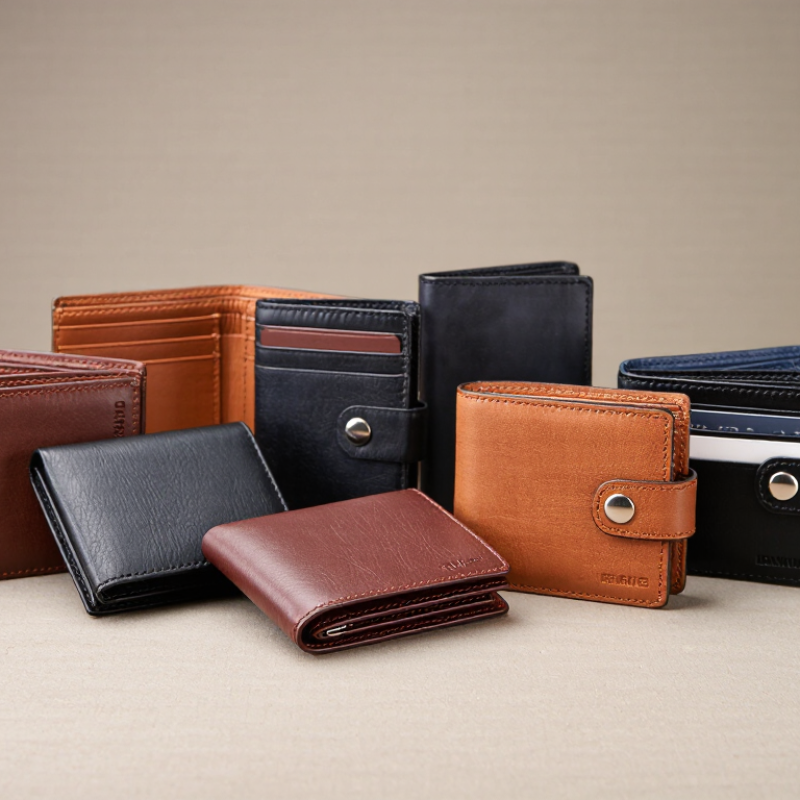
This guide examines 10 Best RFID Leather Wallets for Global Buyers, focusing on useful details rather than exaggerated promises. We consider leather texture, stitching, card capacity, cash storage, closure strength, dimensions, and reported RFID protection. We also look at travel needs, because a wallet used in a busy airport faces different demands from one carried at home.

Small differences matter.

No RFID Leather Wallet can replace careful personal habits. Buyers should check product specifications, warranty terms, and independent testing where available. Some information remains unclear across brands, and that deserves honest attention. The best choice may not be the most expensive model. It should match your cards, routines, climate, and expectations. Reliability starts with practical evidence, not a shiny label.

10 Best RFID Leather Wallets for Global Buyers?

RFID Wallet Basics: ISO/IEC 14443, 13.56 MHz, and NFC Compatibility

A well-made RFID leather wallet should be judged by its technology, not only its stitching or appearance. ISO/IEC 14443 is a key standard for contactless cards operating near 13.56 MHz. It supports short-range communication between a card and a reader, usually within a few centimeters. NFC devices commonly use the same frequency, but NFC compatibility does not mean every RFID function will work identically.

The shielding layer is the important detail. It can reduce unwanted communication when cards remain inside the wallet. However, protection varies with card position, wallet thickness, and shielding quality. I recommend testing each slot with a contactless payment card and an NFC-enabled phone. Place the card fully inside, then move the phone slowly across the leather surface. A failed first test is not enough evidence. Readers differ.

Leather also deserves practical inspection. Look for firm edges, even stitching, and a lining that does not fold over card contacts. A very tight wallet may protect cards but become uncomfortable when filled. My early assumption was that stronger shielding always meant better security. That was too simple. Easy access matters, and some users may need one card to remain readable. Check the product’s technical details, ask for test information, and treat vague “RFID safe” claims carefully. Small differences matter.

Protection Standards: Testing RFID Shields Across 13.56 MHz Frequencies

A quality RFID leather wallet should be tested at 13.56 MHz, the frequency used by many contactless cards. Leather alone does not block radio signals. The internal shield does the real work. During evaluation, place a test card inside every pocket, then scan it with a controlled reader. Record whether the reader detects the card, not merely whether the wallet looks thick.

Reliable testing needs repeated trials. Check the wallet closed and partly open. Test the front, back, edges, and several card positions. Change the reader distance from a few millimeters to several centimeters. Reader power, antenna design, card type, and wallet alignment can change the result. A shield that performs well in one setup may respond differently in a busy airport terminal.

I also look for measurable attenuation in decibels, while confirming complete read failure in practical tests. Numbers help, but they are not the whole story. Stitching, gaps, and worn lining may weaken protection over time. That detail is easy to miss. A new wallet can pass a bench test and still disappoint after months of folding. My testing notes should be more transparent about these limits. No single result proves universal protection, especially when different cards and readers are involved. Buyers should examine independent test conditions, material construction, and the maker’s care guidance before comparing RFID leather wallets for global travel.

Global Buyer Criteria: Leather Grades, Card Capacity, Size, and Currency Use

Choosing the 10 best RFID leather wallets for global buyers requires more than checking the RFID label. Leather grade matters. Full-grain leather usually shows natural texture and becomes softer with use. Top-grain leather looks smoother and often offers consistent finishing. Genuine leather can vary widely, so buyers should inspect thickness, stitching, and product specifications carefully.

Card capacity should match daily habits. A compact wallet may hold six to eight cards without becoming bulky. Larger designs can carry ten or more cards, receipts, and folded notes. Overfilling weakens seams and makes contactless cards harder to remove. A practical test is simple: place your usual cards inside and check whether the wallet still closes flat. Small details matter.

Size also affects comfort across countries. Wallets made for wider banknotes may not fit smaller pockets well. Buyers who handle several currencies should look for a full-length cash section, flexible dividers, and enough room for coins or travel receipts. RFID protection can reduce unwanted scanning, but it does not replace careful payment habits. Protection may also block convenient access at transit gates. That trade-off is easy to overlook. Leather sourcing and construction claims should be supported by clear seller information, return terms, and consistent measurements. Product photos can mislead. I would measure my current wallet before ordering, although even that method is not perfect.

Top 10 RFID Leather Wallets Compared by Security, Design, and Usability

The ten best RFID leather wallets differ most in security, design, and daily usability. Security begins with a tested RFID shielding layer, not a marketing label. A strong wallet should protect common contactless card frequencies while keeping cards easy to remove. Some models shield every compartment. Others protect only the central card slots. That difference matters.

In practical comparisons, compact bifold wallets usually offer balanced security and storage. Slim cardholders feel lighter but may hold fewer cards securely. Zippered designs protect loose items better, yet they can feel bulky in a trouser pocket. Full-grain leather often develops a richer surface over time, while corrected leather gives a more uniform finish. The top ten options include minimalist, travel, coin-pocket, passport, and money-clip styles. Their stitching, edge paint, and lining deserve close inspection. Weak seams can reduce confidence quickly. Very quickly.

Usability is often overlooked. A wallet with tight slots may protect cards, but daily access becomes frustrating. A loose slot can cause cards to slide out when the wallet is opened. I also noticed that shielding performance may vary with construction and card placement. No wallet should be treated as complete protection against every form of payment fraud. Buyers should check independent test details, return policies, dimensions, and care instructions. My preferred design changed after testing pocket comfort; the thinnest option was not the easiest to use. A slightly wider wallet sometimes offered better organization and fewer dropped cards.

Compliance Checklist: EMVCo Payments, REACH Materials, and Warranty Coverage

Choosing among the 10 best RFID leather wallets requires more than checking card capacity. Compliance documents matter, especially for global buyers. EMVCo applies to payment cards, terminals, and transaction systems, not automatically to a wallet. A responsible supplier should explain shielding performance without claiming unsupported certification. Ask for test conditions, frequency ranges, distance, and sample identification. Test the wallet with contactless cards from different issuers. One successful tap is not enough. Metal-lined pockets may block signals, but poor stitching can create gaps near the edges.

REACH compliance deserves equal attention. Request material declarations for leather, dyes, adhesives, coatings, and metal parts. Independent laboratory reports should identify the tested batch and report restricted substances clearly. “REACH compliant” alone is weak evidence. Check whether the documents are current for your target market. Leather thickness, odor, seam strength, and card fit should also be recorded during inspection. These small details often reveal inconsistent production. I have seen attractive samples fail because the lining lifted after repeated folding. The mistake was trusting photographs too much.

Warranty coverage should state the period, covered defects, inspection process, shipping responsibility, and replacement terms. A 12-month promise means little without written conditions. Clarify whether broken stitching, peeling edges, and failed shielding qualify. Keep purchase records and inspection photos. Real reliability is measured after months in a pocket, not on a showroom table. Some requirements remain unclear across regions, so buyers should obtain local advice before importing large quantities.

FAQS

What does ISO/IEC 14443 mean for an RFID leather wallet?

It describes contactless cards using short-range communication near 13.56 MHz. Most readers work within a few centimeters. It is not a guarantee of complete protection.

Does NFC compatibility mean every card will work the same way?

No. NFC devices commonly use 13.56 MHz, but card functions can differ. Reader power, antenna design, and card type affect results.

What part of the wallet blocks radio signals?

The internal shielding layer does the real work. Leather mainly provides structure and appearance. A thick wallet is not automatically safer.

How can I test every wallet slot?

Place a contactless test card fully inside each pocket. Close the wallet, then scan slowly across the front, back, edges, and seams. Repeat the test several times.

Why might a wallet pass one test but fail another?

Readers differ in power and antenna design. Card position and wallet alignment also matter. A busy terminal may behave differently from a small desk reader.

What should shielding test results include?

Useful results mention frequency, reader distance, card type, and test position. Decibel measurements can help. They still do not prove universal protection.

Can strong shielding make a wallet inconvenient?

Yes. Tight slots may protect cards but make removal frustrating. Some users may need one card to remain readable. My earlier assumption was too simple.

What leather and construction details deserve attention?

Check firm edges, even stitching, and a lining that stays away from card contacts. Look for gaps and loose seams. Small defects can worsen after months of folding.

Which wallet shape suits everyday use?

Bifold wallets often balance storage and comfort. Slim cardholders feel lighter but hold fewer cards. Zippered styles secure loose items, though trouser pockets may feel crowded.

What should buyers check before choosing a wallet?

Review independent test conditions, dimensions, return terms, and care guidance. Test each slot yourself when possible. The thinnest design may not be the easiest to use.

Conclusion

This guide explains how to choose an RFID Leather Wallet for secure, practical, and stylish everyday use. It introduces RFID fundamentals, including ISO/IEC 14443 standards, 13.56 MHz frequencies, and NFC compatibility, while showing why shield performance should be tested across the same frequency range used by many contactless cards. Readers will also learn how leather quality, stitching, card capacity, wallet dimensions, and currency preferences affect comfort and usability in different regions.

The comparison of ten RFID leather wallets focuses on three key areas: security, design, and daily convenience. It also provides a buyer-friendly compliance checklist covering EMVCo payment considerations, REACH-related material expectations, and warranty coverage. By reviewing these factors together, global buyers can select a durable wallet that balances card protection, responsible material choices, organized storage, and reliable long-term value without sacrificing appearance or ease of use.

Ethan

Ethan

Ethan is a professional marketing specialist dedicated to helping businesses understand how thoughtful strategy, reliable products, and customer-focused service can create lasting value. With a strong understanding of the company’s product portfolio, industry trends, and customer needs, he......

Planning a Wallet, Bag or Belt Programme?

Send your design, quantity and destination — our export team responds within one business day.

Contact Our Export Team