
Leather Goods Manufacturer & Exporter Since 1995 · Shipping to 50+ Countries · GST 07AGXPK0652P1ZN
+91-98103-67695 [email protected]
0%

Buying a Womens Leather Clutch for a global market takes more than choosing an attractive color. Buyers need to assess how the bag feels, functions, and holds up after repeated use. A smooth finish may look impressive under showroom lights, but uneven stitching or a weak clasp can tell a different story. Details matter.

This guide presents ten practical buying tips for comparing products and suppliers with greater confidence. Check the leather description against a physical sample, and inspect grain, lining, edge paint, seams, and hardware. Measure the clutch with a phone, cards, and other everyday items inside; stated dimensions alone can be misleading. Ask about color consistency across production batches, available customization, minimum order quantities, and realistic lead times. Request clear product photos and written specifications. Keep records.

For international orders, confirm packaging, shipping estimates, and the documents your chosen provider can supply. Destination requirements vary, so buyers should verify relevant details for their own markets rather than rely on assumptions. A lower unit price can lose its appeal when quality checks, freight, or delays are overlooked. Still, no checklist removes every risk, and samples may not perfectly reflect bulk production. That deserves attention. The tips ahead help buyers ask sharper questions, compare offers fairly, and choose a clutch that suits both customers and commercial needs.
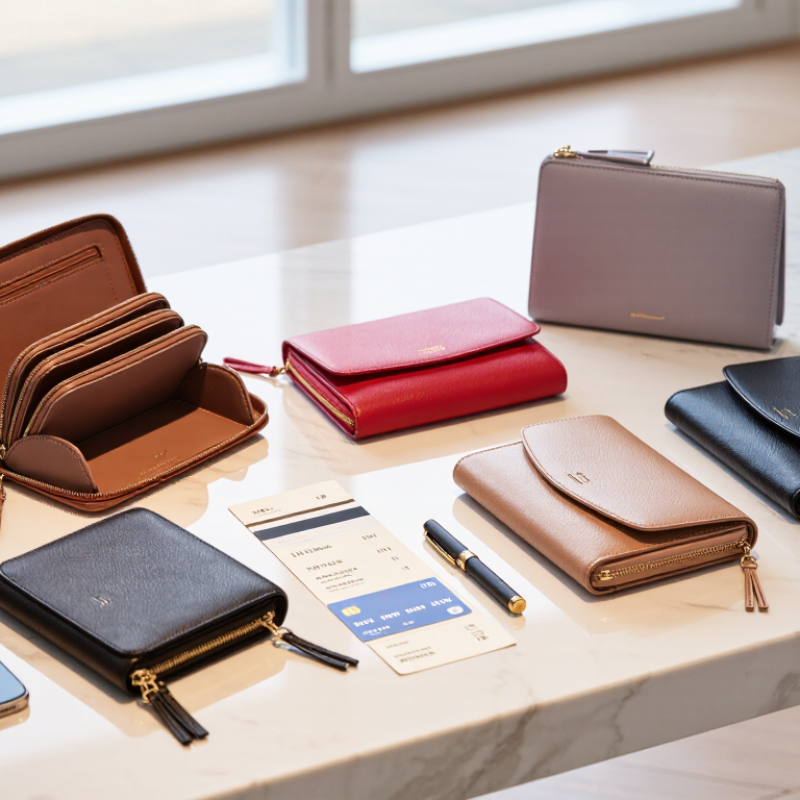
10 Womens Leather Clutch Buying Tips for Global Buyers

Define the Clutch’s Purpose, Size, Capacity, and Target Market

Start with the occasion: evening events, daily commuting, or travel each demand different access and security. For formal use, a slim clutch may hold a phone, cards, keys, and lipstick. For travel, buyers may need a zip pocket, wrist strap, and room for a passport. Fit matters. Measure the intended phone and passport, then test them inside a production-size sample. A neat specification sheet can still mislead; packed samples may reveal a stiff closure or awkwardly shifting contents. Leave a little room for review.

Set dimensions and capacity around the target customer, not a generic “one-size” claim. Ask retailers which items shoppers carry, how the clutch will be displayed, and what price range fits their market. UN Tourism’s January 2025 World Tourism Barometer reported 1.4 billion international tourist arrivals in 2024, about 99% of 2019 levels. That supports considering travel-friendly designs, but it does not prove demand for any particular clutch. The State of Fashion 2024 report projected 2–4% growth in global fashion sales for 2024; this broad forecast is useful context, not a clutch-market estimate. Test it. Compare sample capacity, opening ease, and weight with local buyer feedback before confirming specifications.

Identify Leather Type, Grade, Grain, and Traceability Requirements

Leather terminology can hide important differences. “Genuine leather” alone does not tell you the surface quality or construction. Ask whether the clutch uses full-grain, corrected-grain, or split leather, and request a written material specification. Full-grain usually retains the natural surface, including small marks. Corrected-grain leather may be sanded and finished for a more uniform look. Split leather comes from lower layers and often receives a coating. Compare samples in daylight; a glossy finish can disguise grain and color variation.

Tips: Check the cut edge and lining seam for peeling or loose fibers. Ask for the supplier’s grading criteria, since “Grade A” is not a universal standard. Request traceability details that connect the leather to its tannery or documented source, plus available audit or material records. Ask for proof.

For a repeat order, keep an approved sample and record its color, texture, thickness, and finish. Test a small area with a dry cloth, then check how the surface responds to gentle rubbing. Results can vary by finish, so do not treat one quick test as definitive. Traceability paperwork may be incomplete; note the gap and decide whether it meets your purchasing requirements. Small natural marks are not automatically defects, but their size and placement should match the agreed standard.

Evaluate Strength and Tear Resistance Using ISO 3376 and ISO 3377-2

For a leather clutch, a polished surface tells you little about how the material handles pulling at seams or corners. Ask suppliers for test results based on ISO 3376:2020, which measures tensile strength and elongation, and ISO 3377-2:2016, which measures double-edge tear load. The methods report results in measurable units, including strength in N/mm² and tear load in newtons. Small details matter.

Request results for the actual leather thickness and finish offered, not a similar sample. Compare specimens taken from different areas and orientations where possible; leather can vary across a hide. Record the sample condition, thickness, and test direction alongside each result. A neat-looking seam can still fail. These ISO methods describe how to test, not one universal pass mark, so agree on product-specific limits before production.

Use the figures to assess risk, not to promise a clutch will never tear. A high tear-load result may be reassuring, but sharp hardware, tight stitching, and repeated overfilling can still concentrate stress. I would question a report with no sample identification or unusually precise claims but no test details. Ask for the laboratory report, confirm the method edition, and compare like with like before approving a bulk order.

Verify EU Chromium VI Compliance: The Limit Is 3 mg/kg Under REACH

For a leather clutch sold in the EU, ask suppliers to verify chromium VI in the leather components. REACH sets a limit of 3 mg/kg for leather parts that come into contact with skin. A clutch may rest against a hand or wrist during use, so do not assume its small size removes the need for review. Check which materials the test covers.

Request a recent laboratory report linked to the exact leather type, color, and production lot. Chromium VI can vary with tanning, storage, heat, and moisture. A report for a similar-looking sample may not represent your order. Look for testing by a competent laboratory, with a stated method and clear results in mg/kg. Keep the report, sample details, and supplier declaration together.

Check again when the tannery, finish, or production site changes. One report is not a permanent guarantee. Ask how samples were selected and whether testing reflects the finished leather, not only an earlier material stage. Small details matter: a glossy black panel and a pale lining may come from different sources. There is room for uncertainty, so buyers should confirm the rule’s application to the specific article with their EU compliance specialist.

10 Womens Leather Clutch Buying Tips for Global Buyers - Verify EU Chromium VI Compliance: The Limit Is 3 mg/kg Under REACH
No. Buying dimension What to verify Practical buyer action
1 REACH Chromium VI compliance Under REACH Annex XVII, Entry 47, leather articles or leather parts in contact with the skin must not contain Chromium VI at a concentration equal to or greater than 3 mg/kg (0.0003% by weight). Request a recent test report covering the leather used in the clutch. Check that the tested material and color or finish match the goods being purchased.
2 Test method and report details EN ISO 17075-1 and EN ISO 17075-2 describe methods for determining Chromium VI in leather. A report should identify the test method, sample, result, and test date. Ask the testing laboratory or supplier to clarify the method and sample traceability. Do not treat a generic declaration as a substitute for supporting test evidence.
3 Leather composition Confirm whether the outer material is genuine leather, split leather, coated leather, or a non-leather material. These descriptions are not interchangeable. Request a written material specification for the outer shell, trim, and any leather parts that may touch the skin.
4 Dimensions and usable capacity External dimensions do not show how much the clutch can hold; lining, gussets, and closures affect usable space. Confirm length, height, depth, and internal compartment dimensions in centimetres. Ask for measurements of a finished sample.
5 Closure and hardware Check that the zipper, clasp, magnetic snap, or frame closes securely and does not snag the lining or surrounding material. Open and close the sample repeatedly, inspect attachment points, and confirm the specified hardware finish and operation in writing.
6 Stitching and construction Uneven stitching, loose threads, weak corners, and poorly attached handles or wrist straps can affect durability. Inspect seams and stress points on a production-representative sample. Agree on acceptable workmanship criteria before placing an order.
7 Color transfer and finish Leather color and surface finish can vary. Rub resistance and color transfer should be checked for the intended use and colorway. Review a physical sample and request relevant colorfastness test information when required by your product specification or market.
8 Lining and interior details Assess lining attachment, pocket stitching, edge finishing, and any labels or components inside the clutch. Confirm lining material and pocket layout against an approved specification; inspect for exposed edges, snags, and loose seams.
9 Order consistency and inspection Material, color, dimensions, and construction may vary between samples and production batches. Approve a reference sample and define inspection checks for the ordered goods, including material identity and required compliance documents.
10 Packaging and shipping readiness Packaging should protect the clutch from scratches, moisture, and crushing during handling and transport. Specify individual protection, carton packing, product identification, and shipping marks. Check applicable import and packaging requirements for the destination market.
Compliance note: The 3 mg/kg REACH threshold applies to Chromium VI in leather articles or leather parts that come into contact with the skin. Confirm the applicable requirements and evidence for the specific product and market.

Check HS 4202.21 Classification, CITES Rules, Samples, and Landed Costs

For a leather clutch, HS 4202.21 generally covers handbags with an outer surface of leather or composition leather. The shape alone does not settle classification. Share material specifications, product photos, and construction details with your customs broker before quoting duties; national tariff schedules can add further digits. Check wildlife-derived trims separately. CITES controls apply to certain listed species, so confirm the material’s species and required documents with the relevant authorities before ordering. Small details matter.

Ask for a pre-production sample, not just a polished showroom piece. Check the clutch in your hand: measure its width, test the clasp, inspect edge paint, and look for loose lining near the corners. Record approved materials and measurements in writing, then compare bulk goods against that sample. I have seen tiny finish changes become costly disagreements.

Calculate landed cost per sellable unit, including product price, freight, insurance, customs duty, brokerage, and inspection. Duty depends on destination, origin, and final classification. UNCTAD’s Review of Maritime Transport 2024 reported that Shanghai–Europe container spot rates more than tripled between late 2023 and mid-2024, showing why freight assumptions need regular checks. Leave room for delays. A spreadsheet estimate is still only an estimate.

Women’s Leather Clutch: Illustrative Landed-Cost Breakdown

Example planning model showing how landed cost may be allocated per order. Percentages are illustrative, not universal rates.

Confirm the product’s classification with the destination customs authority: HS 4202.21 generally covers handbags with an outer surface of leather, composition leather, or patent leather, but the correct classification depends on the item and local tariff rules. Duty and VAT/GST vary by destination, origin, and customs value. Check CITES requirements if the clutch uses regulated wildlife-derived materials, and request samples before approving production.

FAQS

What does “genuine leather” tell me about a clutch?

It does not identify the leather’s surface quality or construction. Ask whether it is full-grain, corrected-grain, or split leather, and request written specifications.

How can I check leather samples?

Compare them in daylight. Look for small natural marks, uneven color, or a glossy coating that hides grain. Check the cut edge and lining seam for peeling or loose fibers.

Is “Grade A” a reliable leather standard?

Not by itself. Ask the supplier to explain its grading criteria and provide traceability records. Gaps in the paperwork are worth noting.

What should I record for repeat orders?

Keep an approved sample. Record its color, texture, thickness, and finish. Compare new production against it, not just against a photo.

Which tests can help assess leather strength?

ISO 3376:2020 measures tensile strength and elongation. ISO 3377-2:2016 measures double-edge tear load. Ask for reports on the actual leather thickness and finish.

Do strong test results guarantee a durable clutch?

No. Sharp hardware, tight stitching, and repeated overfilling can still stress seams and corners. A neat seam can fail.

What should I inspect in a pre-production sample?

Measure its width, test the clasp, inspect the edge paint, and check for loose lining near the corners. Small finish changes can cause disagreements.

How should I estimate the landed cost?

Include product price, freight, insurance, customs duty, brokerage, and inspection. Duty depends on destination, origin, and final classification. Keep a buffer for delays; estimates can shift.

Conclusion

Choosing a Womens Leather Clutch for international markets starts with defining its purpose, intended customer, size, and carrying capacity. Match the design and leather type to the target market, and assess leather grade, grain, finish, and traceability so buyers can compare quality and sourcing claims consistently. Request representative samples to review construction, appearance, and practical usability before placing an order.

For durability, ask for test results on leather strength and tear resistance using ISO 3376 and ISO 3377-2. Confirm that applicable chemical requirements are met, including the REACH limit of 3 mg/kg for chromium VI. Before shipment, check the appropriate HS 4202.21 classification, confirm whether any materials require additional lawful sourcing documentation, and calculate landed costs such as freight, duties, and handling fees. These checks help buyers make informed decisions and reduce avoidable surprises.

Vivienne

Vivienne

Vivienne is a highly skilled marketing professional dedicated to helping customers better understand the company’s products, services, and industry solutions. With a strong combination of strategic insight, market awareness, and practical product knowledge, she creates clear, informative, and......

Planning a Wallet, Bag or Belt Programme?

Send your design, quantity and destination — our export team responds within one business day.

Contact Our Export Team