
Direct-from-factory cross-body portfolios engineered to withstand extreme tensile loads, rigorous wet/dry friction cycles, and chemical safety screenings.

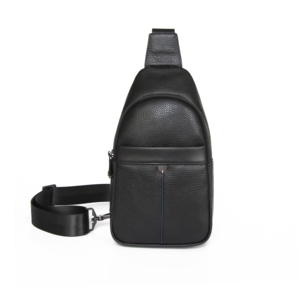

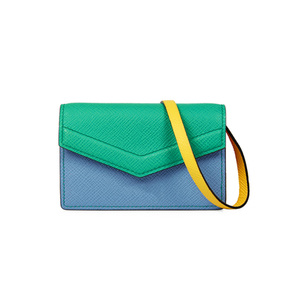
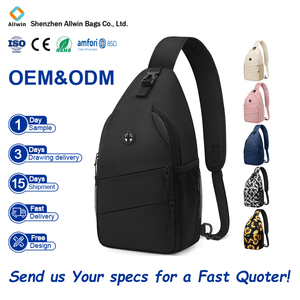
Calibrated for commercial buyers navigating varying demographics, durability thresholds, and strict compliance boundaries across Europe, North America, and the GCC.
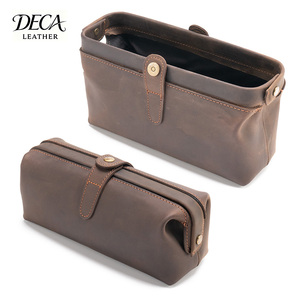
Engineered with 1.4-1.6mm uncorrected pull-up and veg-tanned hide. Features heavy-duty nylon-bonded 69 thread, reinforced D-ring anchors, and edge burnishing suited for legacy heritage brands and direct-to-consumer flagship positioning.
Features embedded interior liners tested to attenuate 13.56 MHz RFID/NFC frequencies by >65dB. Perfectly aligned with European commuter safety requirements, integrating quick-release magnetic Fidlock attachments.
A fusion of winter warmth plush aesthetics and structural leather skeletons. Features targeted load distribution along base perimeters to maintain geometric balance under heavy contents.
Developed for volume retail promotions and ethical vegan positioning. Utilizes multi-layer solvent-free PU composites with water-repellent surface finishes passing 50,000 Bally flex cycles.
| Substrate / Parameter | Compliance Test Standard | Laboratory Acceptance Threshold | Commercial Sourcing Target |
|---|---|---|---|
| Hexavalent Chromium (Cr VI) | EN ISO 17075-1 / REACH Annex XVII | < 3.0 mg/kg (Detection Limit) | Mandatory for all EU/CE Leather Inflow |
| Bespoke Hardware (Nickel Release) | EN 1811:2011 + A1:2015 | < 0.5 μg/cm²/week migration | Direct Skin-Contact Buckles & Rings |
| Strap Seam Tensile Load | ISO 13934-1 / SATRA TM180 | > 250 N (Break Load Minimum) | Heavy Commuter Crossbody Construction |
| Dry/Wet Friction Colorfastness | ISO 11640 (Veslic Method) | Dry: Grey Scale ≥4 | Wet: ≥3/4 | Garment-Contact Dark Dye Substrates |
How progressive category managers and supply chain executives balance decarbonization mandates, evolving micro-mobility ergonomics, and omnichannel lean inventory models.
The impending implementation of the EU Ecodesign for Sustainable Products Regulation (ESPR) is forcing suppliers to provide transparent hide provenance. We assist brands by verifying tannery origins and audit trails from Sadar Bazar, Delhi to final delivery.
Micro-mobility riders and international remote professionals seek versatile chest bags capable of transitioning seamlessly from front carry to hip-pack configurations. Modern tooling demands ambidextrous strap pivots and discreet power-bank access channels.
Traditional rigid MOQs of 2,000 pieces per SKU are yielding to nimble 50-100 unit production runs. By optimizing computerized pattern cutters and skiving setups, procurement directors achieve rapid testing of distinct grain textures without excessive inventory overhead.
Regulatory scrutiny over effluent discharges has accelerated buyer demand for synthetic-tannin and olive-leaf tanned leathers. Suppliers who maintain direct tanner relationships offer buyers a verified competitive edge in sustainability documentation.
Established in 1995 within Sadar Bazar, Delhi, Naz Leather Export bridges deep artisanal heritage with high-throughput global distribution. Certified under Indian Goods and Services Tax (GST 07AGXPK0652P1ZN) and operating across multiple operational units—including specialized facilities in Motiya Khan, Rani Jhansi Road—we offer end-to-end transparency that eliminates cross-border sourcing risks.
Every consignment is backed by formal Proforma Invoices explicitly detailing leather grade, thickness tolerances, lining GSM, and hardware composition. Rather than relying on speculative broker claims, our direct manufacturing floor manages raw hide skiving, computerized pattern stitching, edge creasing, and multi-stage manual burnishing in-house.
Direct answers to core questions regarding minimums, production timeframes, legal documentation, and testing frameworks.
CE certification confirms product conformity with European health, safety, and environmental protection standards. For leather sling bags and accessories, this involves rigorous compliance with REACH Regulation (EC) No 1907/2006 (Annex XVII restrictions on Hexavalent Chromium Cr VI, AZO colorants, cadmium, and lead) alongside nickel-release restrictions under EN 1811 for metallic elements in skin contact.
Our custom OEM development starts at 100 units per style for small leather goods and 50 units per style for complex sling bags and backpacks. Catalog-based styles can be packaged with customized branded hang tags or embossed logos in volumes starting from 200 units, accommodating growing digital brands and institutional buyers.
Every manufacturing order undergoes initial raw hide grading (assessing grain uniformity, thickness gauge, and scar-free surface area), followed by in-line assembly reviews (verifying stitch count per inch, skiving depth, and glue curing), and concludes with pre-shipment inspection evaluating hardware integrity, dimension tolerance, and packaging compliance.
Standard bulk manufacturing ranges from 20 to 35 working days post-counter-sample validation. Each outbound export consignment is shipped under formal commercial documents, including full Commercial Invoices, detailed Packing Lists, Bills of Lading/AWBs, and non-preferential Certificates of Origin for international clearance.
Yes. Our material stock encompasses vegetable-tanned, oil pull-up, vintage Crazy Horse, top-grain pebble textures, and genuine split layers. All hide classifications are agreed upon and specified in the Proforma Invoice to safeguard transparency across the entire retail value chain.
Initial commercial partnerships typically operate under a 50% advance deposit with the remaining 50% payable against pre-dispatch quality verification via TT/SWIFT bank transfer. Prototype sample costs are fully credited toward subsequent bulk manufacturing runs, establishing a low-risk onboarding process.
Direct factory access, transparent leather grading, and verified CE/REACH compliance. Request comprehensive spec sheets, physical material samples, and direct B2B pricing today.
Get Catalog