Engineering Authority: Three Decades of Industrial Leather Processing
Operating continuously since 1995 from Sadar Bazar, Delhi, India (GST: 07AGXPK0652P1ZN), our integrated manufacturing complexes bridge traditional leather artisan mastery with modern, industrial-grade throughput. While retail-facing leather markets frequently suffer from unpredictable grain splits, delaminating synthetic layers, and dubious chromium compliance, our facilities operate under rigorous quality management structures designed to satisfy the strict importation demands of the European Union, the United States, the United Kingdom, and the UAE.
Our OEM and private-label contract services do not rely on standard assembly lines. We manage raw hide procurement directly from LWG (Leather Working Group) certified and audited domestic tanneries, ensuring that all split cowhide, top-grain, and full-grain stocks possess verifiable chemical documentation. In strict adherence to the European Union's CE frameworks and REACH Regulation (EC) No 1907/2006, every hide cut within our workshops contains non-detectable levels of Hexavalent Chromium [Cr(VI)], banned azo dyes, dimethyl fumarate (DMFu), and short-chain chlorinated paraffins (SCCPs).
Contractual Grade Transparency
We declare precise tannery grades—Full-Grain, Top-Grain, Genuine (Split), or Technical PU—directly on the legal proforma invoice, eliminating downstream labelling discrepancies.
Three-Tiered AQL Quality Control
Independent mechanical tests monitor hide tensile yield, tensile seam load, edge paint bonding elasticity, and scratch resistance before packaging approvals.
End-to-End Export Logistics
Complete preparation of dual-stamped Certificates of Origin, specialized EUR.1 forms, air-freight manifests, and secure export ocean-container consolidation.
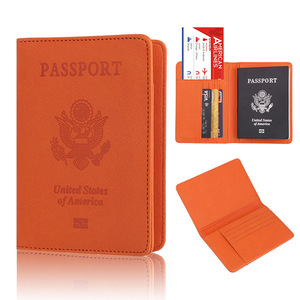
Precision is maintained through edge finishing operations where Italian polyurethane compounds are heat-sealed, cured, and edge-burnished over three distinct passes. Structural load zones—such as thumb slots, card pockets, money clip tension pivot hinges, and document gussets—receive micro-density bartack sewing and nylon core bonding. This eliminates fraying under high-frequency daily usage, safeguarding brand reputation for overseas retailers.
Engineering Benchmark: Material Properties & Manufacturing Metrics
International sourcing managers must evaluate leather goods through empirical mechanical standards rather than aesthetic marketing claims. Below is our baseline engineering specification guide utilized across enterprise production lines to satisfy retail audits across US and European logistics corridors.
| Evaluation Parameter |
Full-Grain Cowhide Series |
Top-Grain Buffed Line |
Technical PU Composite |
Compliance Test Metric |
| Tensile Strength (Seams) |
≥ 220 N / 50 mm |
≥ 180 N / 50 mm |
≥ 140 N / 50 mm |
ISO 3376 / ASTM D2209 |
| Tear Resistance (Slits) |
≥ 45 N |
≥ 35 N |
≥ 25 N |
ISO 3377-2 (Baumann) |
| RFID Attenuation Yield |
> 65 dB (13.56 MHz) |
> 65 dB (13.56 MHz) |
> 65 dB (13.56 MHz) |
MIL-STD-285 / IEEE 299 |
| Flex Endurance (Cycles) |
100,000 cycles (No crack) |
80,000 cycles (No crack) |
50,000 cycles (No micro-tear) |
ISO 5402-1 (Bally Flex) |
| Color Fastness (Wet Rub) |
Grey Scale ≥ Grade 4 |
Grey Scale ≥ Grade 4 |
Grey Scale ≥ Grade 4.5 |
ISO 11640 (Veslic 500 rubs) |
| Heavy Metal Limits |
Cr(VI) < 3.0 mg/kg |
Cr(VI) < 3.0 mg/kg |
Cadmium/Lead Free |
EN ISO 17075-1 / REACH |
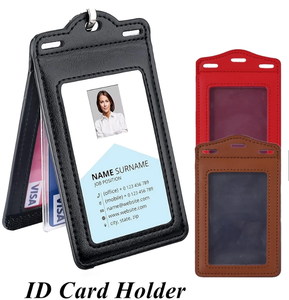
In addition to raw tensile thresholds, our RFID-shielding mechanisms employ nickel-copper alloy vacuum metallized fabrics embedded between the external hide and interior organic cotton or silk twill linings. This creates a complete Faraday shield preventing wireless unauthorized interrogation of ISO/IEC 14443 contactless smart credit cards, biometric e-passports, and encrypted facility access badges.
Macro Procurement Analysis: Sourcing & Structural Trends
The enterprise leather goods landscape is experiencing monumental shifts driven by consumer technology integration, strict environmental traceability regulations, and optimized retail distribution footprints. Commercial procurement directors must incorporate the following trends into their multi-year vendor selection strategies:
Cashless & Micro-Format Shift
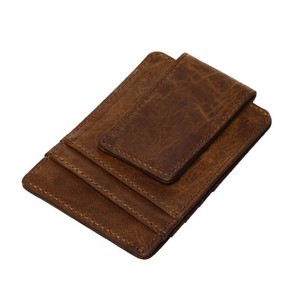
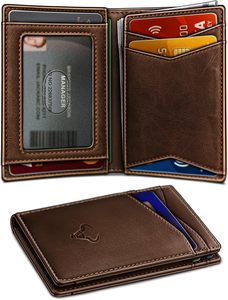
Thick trifold configurations are consolidating into slimline, front-pocket card holders and money clips engineered around card-fan ejection triggers and compact geometry.
Smart Geolocation Tracking
Structural pockets are now engineered with molded, sonic-welded retention cavities designed to securely house Apple AirTag and Ultra-Wideband (UWB) tracking beacons without stretching pocket borders.
Vegetable Tanning & Zero Chrome
Corporate buyers and tier-1 luxury departments require mimosa, chestnut, and quebracho vegetable extracts over conventional chrome baths to meet stringent corporate ESG directives.
Hybrid Technical Composites
High-demand accessory lines blend full-grain external trims with abrasion-resistant Cordura linings, aerospace carbon fiber plates, and water-repellent magnetic closures.
EU Digital Product Passports (DPP)
Forward-thinking brands are sourcing batches with laser-engraved micro-QR codes or embedded NFC tags linking consumers directly to tannery origins and verifiable carbon footprints.
Procurement FAQ: Critical Factors for Importers & Wholesalers
Direct answers addressing supply chain logistics, contractual liabilities, certification standards, and OEM tooling protocols.
What exact testing documents establish CE compliance for leather wallets?
+
Wallets carrying CE conformity marks or designated for distribution in the EU must satisfy chemical safety under REACH Annex XVII alongside electromagnetic shielding validation. Specifically, third-party lab documentation from testing bodies such as SGS, TUV, or Intertek must verify that Hexavalent Chromium [Cr(VI)] is below detection limits (< 3 ppm per EN ISO 17075), total Cadmium is below 100 mg/kg, and azo colorants cleaving into carcinogenic amines are non-detectable (< 30 mg/kg per ISO 17234-1). Where RFID-blocking capabilities are asserted, lab testing confirms signal damping exceeding 60 dB across the 13.56 MHz and 860-960 MHz UHF bands in compliance with IEEE-299 standards.
How does Naz Leather Export handle custom branding and tooling fees?
+
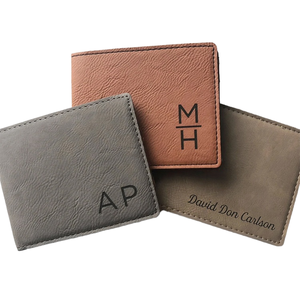
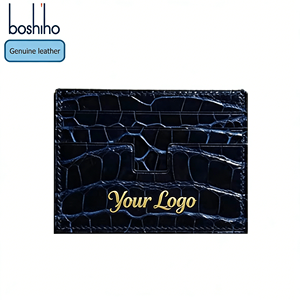
We provide precision in-house tooling including CNC-milled magnesium embossing dies, heated gold/silver foil stampers, fiber-laser marking jigs, and molded alloy metal hardware. Tooling and die charges are charged on a transparent, one-time prototype basis (typically USD $40-$80 depending on complexity). When production orders cross 500 units per silhouette, initial sample tooling charges are credited back to the buyer's bulk proforma invoice. Tooling designs remain the exclusive intellectual property of the commissioning client.
What are the clear differentiators across Full-Grain, Top-Grain, and Split Leathers?
+
Full-grain represents the outermost epidermal layer of the hide with zero mechanical buffing or corrective sanding; it maintains natural hair follicles, maximum tensile strength, and develops a rich patina over years of friction. Top-grain undergoes subtle sanding to eliminate natural surface scars, followed by uniform pigment finishing for higher color consistency across large retail batches. Split (genuine) leather comes from lower corium fibrous layers split away from the grain, typically coated with polyurethane and embossed with an artificial pattern. We guarantee our hide descriptions in writing and provide corresponding batch cross-sections with every pilot sample.
What are standard production timelines from counter-sample approval to port departure?
+
Initial counter-samples require 5 to 7 business days following digital tech-pack or pattern confirmation. Upon physical sample sign-off and receipt of deposit (standard 50% TT deposit, balance prior to dispatch), full bulk runs between 500 and 5,000 pieces take 20 to 35 working days. Consolidated maritime shipments route primarily via Nhava Sheva (JNPT) or Mundra ports, while priority courier and air cargo dispatches exit directly through Indira Gandhi International Airport (DEL), Delhi.
What steps ensure consistency between the pre-production sample and mass volume?
+
Every signed pre-production sample is divided into two control units: one stays with the client, and the other is cataloged in our quality room under a master serial index. Mass hide lots are cut using CAD digital oscillating knives or steel rule clicker dies to guarantee micro-millimeter cut consistency. Throughout assembly, inline inspectors monitor stitch tension (fixed at 7-8 stitches per inch), edge paint layering, and lining placement against the reference sample. Overseas third-party quality auditors (such as QIMA or Bureau Veritas) are accommodated at our Delhi facility prior to final carton sealing.