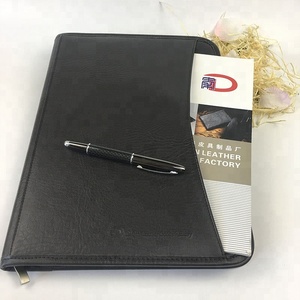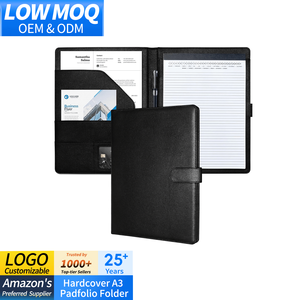
Factory-direct custom folio solutions designed for enterprise branding, corporate executive procurement, and high-durability commercial performance.
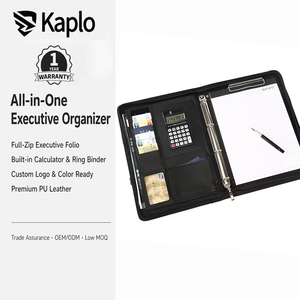
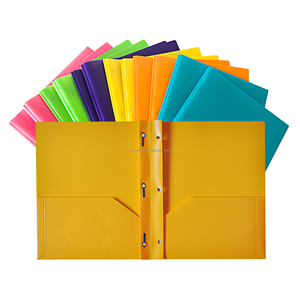
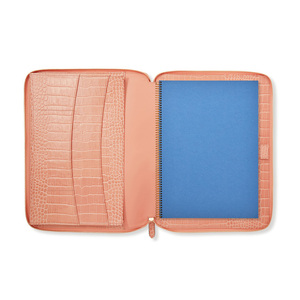
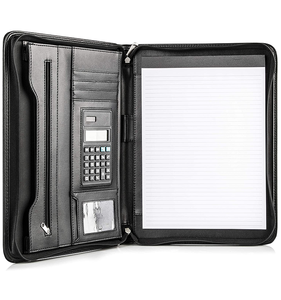
A deep technical perspective on raw material categorization, structural integrity standards, and future sourcing benchmarks for high-volume corporate folder portfolios.
The global enterprise demand for executive leather portfolios spans an intricate spectrum between natural dermis characteristics and synthetic performance polymers. In professional manufacturing facilities across specialized production clusters, technical sourcing teams manage tight tolerances regarding tensile strength, abrasion resistance, and flex-fatigue life. Professional procurement must navigate distinct substrate selections to achieve desired price-to-performance targets.
Top-grain and full-grain bovine leathers represent the highest tier of organizational luxury, exhibiting an authentic, non-uniform pore profile that patinas naturally through handling. In commercial office deployments, however, mineral-tanned semi-aniline leathers are preferred. These retain the organic grain profile while receiving a micron-thin protective topcoat that guards against aqueous spills, cosmetic oils, and UV-induced oxidation. When specifying split leather or genuine leather variants, structural backing often incorporates bonded leather dust mixed with natural rubber adhesives to yield balanced rigidity and consistent thickness tolerances between 1.2mm and 1.6mm.
Concurrently, eco-synthetic innovations such as solvent-free Polyurethane (PU), water-based PU, and high-density Microfiber leather have captured corporate gift and promotional markets. Microfiber leather features a three-dimensional non-woven polyamide fiber matrix that matches the tear resistance and elasticity modulus of high-grade split cowhide. It avoids hydrolytic degradation, delamination, and surface cracking across accelerated 72-hour tropical aging chamber tests. Polyvinyl Chloride (PVC) constructions remain localized to heavy-duty, moisture-impervious filing sleeves and industrial job-ticket binders, balancing budget constraints with wear life.
| Substrate Classification | Tensile Strength (ISO 3376) | Taber Abrasion (Cycles) | Surface Hydrolysis Resistance | Ideal Procurement Scope |
|---|---|---|---|---|
| Full-Grain Cowhide | ≥ 18.0 N/mm² | 5,000+ Revs (Min Weight Loss) | Natural absorption (Requires care) | Luxury Retail, Executive Gifting |
| Top-Grain Semi-Aniline | ≥ 15.0 N/mm² | 3,500+ Revs | Protected Topcoat Barrier | Enterprise Boardrooms, Aviation VIP |
| Microfiber Leather | ≥ 22.0 N/mm² | 8,000+ Revs | Zero Delamination (7-10 Years) | High-End Corporate OEM, ESG Fleets |
| Standard PU Leather | ≥ 8.0 N/mm² | 1,200+ Revs | Standard Hydrolysis (3-5 Years) | Conferences, Educational Folders |
A portfolio folder's functional lifespan is heavily governed by internal reinforcement cores. Industrial manufacturing incorporates compressed grey board ranging from 800 to 1400 GSM, combined with high-density EVA foam sheets to produce tactile hand-feel and dimensional rigidity. Precision skiving machines taper outer edges to 0.4mm before folding and thermal thermo-bonding, mitigating seam bulkiness and ensuring crisp, planar perimeter profiles.
Modern commercial padfolios must house digital electronics alongside physical paper blocks. This operational evolution demands refined structural construction. Automated computer-controlled stitchers run bonded nylon thread (Tex 60 to Tex 90) at calibrated stitch-per-inch (SPI) settings between 6.5 and 8.0 SPI. This density secures interior load-bearing gussets without perforating the substrate.
Edge treatments indicate workshop specialization. High-volume, budget-focused assemblies lean on turned-edge (folded) margins sealed via latex cement and perimeter machine passes. Luxury and bespoke production lines use Italian hand-painted raw edge finishes. This methodology involves four successive cycles: initial mechanical edge trimming, edge penetration sealing, followed by layered acrylic dye passes with thermal sanding intervals. This yields a smooth, rubberized perimeter that resists chipping during thermal swings from -15°C to 50°C.
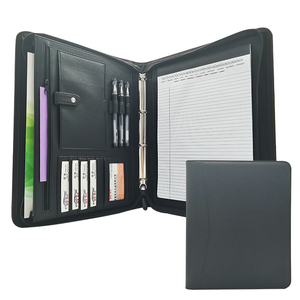
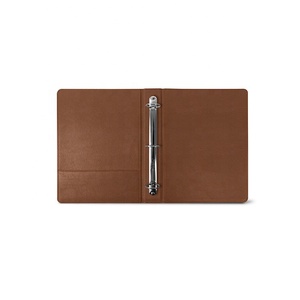
Mechanical closure systems also dictate field reliability. Heavy-gauge metal prong systems and multi-ring binders (such as 3-ring US letter configurations and 4-ring ISO 216 A4 setups) are anchored through internal steel backplates to prevent riveting failures under heavy document loads. Coil and tooth zippers use genuine YKK metal or continuous nylon coils running inverted tape constructions to prevent debris ingress. Interior pockets increasingly feature electromagnetic wave shielding. These multi-layer nickel-copper woven fabric linings offer signal attenuation ≥ 70 dB across 10 MHz to 3 GHz, safeguarding contactless smart cards and executive RFID-enabled credentials from unauthorized interrogation.
Key supply chain shifts shaping product development and corporate tender evaluations through 2026–2030.
Document folders are morphing into mobile workstation centers. Next-generation configurations embed ultra-thin Qi-certified 15W wireless charging coils beneath front covers, discreetly paired with compact lithium-polymer battery units (5,000–10,000 mAh). Internal panels now prioritize modular, shock-absorbing neoprene pockets designed for 11-inch to 13.3-inch tablets, alongside magnetic retention docks for stylus pens and USB-C data loops.
Corporate procurement ESG mandates are phasing out conventional solvent-heavy substrates. Tenders increasingly reward factories offering bio-attributed PU derived from agricultural plant starch, certified Post-Consumer Recycled (rPET) textile interiors, and vegetable-tanned bovine leathers compliant with Leather Working Group (LWG) Gold ratings. Water-based adhesives are displacing toluene compounds to meet REACH and Prop 65 VOC limits.
Enterprise procurement cycles are pivoting from massive multi-year inventories toward localized just-in-time drops. Contract factories now maintain standardized pre-cut carcass shells, using precision CNC laser etching, UV flatbed spot printing, and quick-turn blind debossing stations. This operational agility enables low-volume personalized runs for internal leadership conferences and corporate hospitality without ballooning holding costs.
Direct infrastructure commitments delivering production consistency from technical drawing approval to container consolidation.
Raw skins and composite synthetic rolls undergo rigorous batch lab inspection before entering cut lines. Leather grades, chemical finishes, and core board specifications are formally detailed on the proforma documentation, guaranteeing full transparency across bill-of-materials declarations.
Skilled master leatherworkers oversee manual edge creasing, burnishing passes, edge paint seal application, and critical seam stress relief. Gussets, strap anchors, and handle assemblies are mechanically and manually reinforced against daily fatigue.
Buyers can submit complete tech packs or develop custom variants directly from our archive patterns. In-house capabilities include high-relief blind debossing, metallic hot foil stamping, custom woven labeling, brass badge mounting, and custom presentation gift boxes.
Three decades of global logistics expertise ensures dependable coordination of sea freight (FCL/LCL) and air dispatches. Export document specialists handle commercial invoices, itemized packing lists, and Certificates of Origin for customs clearance.
Answers to common questions regarding minimum orders, technical specifications, and international export processes.
Custom OEM/ODM production typically requires a starting order quantity of 100 to 200 pieces per style, depending on leather selection, custom dyeing runs, and specialized tooling. For catalog styles using factory stock colors (such as executive black, deep cognac, or rich brown), lower thresholds may be accommodated. Custom metal branding badges or unique hardware plating runs may entail dedicated component MOQs.
Full-grain and top-grain leathers preserve the dense outer collagen fibers of the hide, yielding high puncture resistance, flex longevity, and a gentle patina over years of handling. High-grade PU and Microfiber leathers offer superior baseline color uniformity, stain resistance, and lower price points, but will not develop a vintage patina. For executive boardrooms and anniversary gifts, top-grain leather is recommended; for field operations, sales reps, and large corporate events, microfiber and water-based PU leathers deliver better ROI and low maintenance.
Production follows an AQL 2.5/4.0 standard across three main gates: First, incoming raw materials, synthetic rolls, and hardware lots undergo tensile, colorfastness, and plating tests. Second, in-line operators examine skived thickness, adhesive coverage, and seam consistency during assembly. Third, pre-shipment inspectors review dimensions, logo registration, zipper smoothness, and edge paint curing against the buyer's signed master sample before export packaging.
Yes. Portfolio geometry is specifically engineered around the target market. North American orders utilize sizing tailored to 8.5 x 11-inch US Letter pads and standard 3-ring binder spacings. European, Asian, and Oceanic markets are engineered around 210 x 297mm ISO A4 writing pads and 2-ring or 4-ring binder mechanisms. Dual-compatibility hybrid dimensions are also available for multinational enterprise programs.
Prototyping and sample development take approximately 7 to 10 working days once CAD files, tech packs, or physical samples are reviewed. Mass production ranges from 25 to 35 working days following sample approval and initial deposit confirmation. Shipping teams coordinate global freight options via EXW, FOB, or CIF terms, preparing validated commercial invoices, customs-compliant packing lists, and verified Certificates of Origin for entry clearance.
Connect with our technical product engineering and export team to request substrate swatch kits, pattern blueprints, or volume quotations.
Contact Us