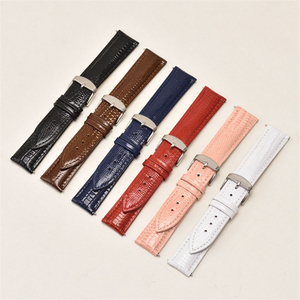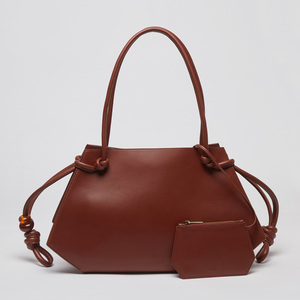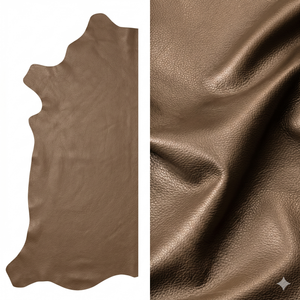
Examine our certified production capabilities spanning full-grain artisan watchbands, bonded vegan leather accessories, crazy horse cowhide collections, and precision-braided structural leather belts.
Unlike solid strap belts cut from a single hide bend, braided leather belts depend on intricate interlocking strands, micro-skived edges, tensile tensioning, and warp-weft stability. Selecting the ideal strand profile prevents premature delamination, strand curling, and uneven stretch under load.
Engineered primarily for casual resort and heritage smart-casual collections. Produced using full-grain vegetable-tanned cowhide strips bevelled at 45 degrees along the grain margins to ensure smooth tactile feedback without fraying.
Designed for modern golf, lifestyle, and comfort utility apparel. Top-grain cowhide or split leather strands are interlaced alongside high-recovery elastane filament cords, delivering up to 15% longitudinal flex while resisting permanent elongation.
Utilized for women's luxury waist belts, cinch belts, and decorative high-fashion ties. Constructed by circular braiders operating 4 to 12 strands around a high-density cotton filler core to preserve round cross-sectional rigidity.
Precise specification alignment before opening tooling moulds or finalizing master samples prevents costly deviations in customs, retail returns, and structural failures under retail lifecycle testing.
| Technical Parameter | Full-Grain Artisan Weave | Top-Grain Bonded Braid | Microfiber / Vegan Hybrid | Testing Standard & Tolerance |
|---|---|---|---|---|
| Base Leather Substrate | Full-grain vegetable-tanned steer hide (Grade A/B) | Corrected grain cowhide with polymer finish | Solvent-free waterborne PU over sea-island microfibre | Visual inspection under D65 standard light booth |
| Strand Thickness & Width | Thick: 2.0 ± 0.15 mm | Width: 4.5 ± 0.2 mm | Thick: 1.6 ± 0.1 mm | Width: 5.0 ± 0.2 mm | Thick: 1.4 ± 0.1 mm | Width: 4.0 ± 0.15 mm | Digital micrometer gauge ISO 2589 |
| Tensile Breaking Strength | ≥ 450 N (Single assembled strap) | ≥ 380 N | ≥ 400 N | ISO 3376 / ASTM D2209 Universal Tester |
| Color Fastness to Rubbing | Dry: ≥ 4-5 Gray Scale | Wet: ≥ 3-4 | Dry: ≥ 4-5 | Wet: ≥ 4 | Dry: 5 | Wet: 4-5 | ISO 11640 (Veslic tester: 100 rubs dry, 50 wet) |
| Hardware Metallurgical Base | Solid forged brass / High-grade #3 Zinc Alloy | Die-cast Zinc Alloy with PVD barrel finish | Zinc Alloy or 304 Stainless Steel | ASTM B117 Neutral Salt Spray (≥ 48-72 hours) |
| Chemical Safety & Compliance | REACH Annex XVII, Cr(VI) < 3 ppm, Prop 65 | REACH compliant, Azo-dye free, Lead < 90 ppm | OEKO-TEX Leather Standard, Zero Phthalates | GC-MS / HPLC spectrometer laboratory certified |
| Recommended Retail Position | Luxury / Heritage ($85 - $160) | High-Street Commercial ($35 - $65) | Sustainable Casual ($40 - $75) | Cost-of-Goods to MSRP Multiplier: 4.5x - 5.8x |
The wholesale braided leather belt manufacturing sector is experiencing rapid structural shifts driven by automated tension-controlled braiding machinery, stringent EU deforestation due diligence (EUDR), and bio-circular tanning chemistries.
Driven by European REACH Annex XVII enforcement and consumer aversion to hexavalent chromium risks, leading China belt exporters have shifted towards synthetic glutaraldehyde and olive-leaf extract wet-white systems. This yields ultra-soft strand pliancy while maintaining zero detectable Cr(VI) under ISO 17075 testing.
Manual hand-braiding often suffers from operator fatigue, causing 2-4mm width variances along a 110cm belt length. Advanced China OEM factories are adopting robotic tensioners that recalibrate strand pull-force in real time, locking width variances within ±0.5mm across high-volume container runs.
From raw hide slaughterhouse geolocation to final carton staging, international retail buyers now demand full traceability. Modern exporters provide batch-level QR laser markings beneath the leather tongue tab, connecting customs officials directly to tannery certifications and environmental audit documentation.
Combining 30+ years of export craft with institutional supply chain management. We bridge the gap between bespoke leather handcrafting and scalable industrial contract manufacturing.
We eliminate ambiguity. Every proforma invoice states the exact substrate: whether Full-Grain Cowhide, Top-Grain Corrected, or Bonded Split. No hidden fillers, no undisclosed synthetic cores. Your brand's retail compliance claims remain entirely ironclad.
Our QA team inspects incoming raw skins for thickness uniformity, checks strand tensioning during plaiting, and performs 100% manual bench inspection for loose strand ends, buckle rivet integrity, and edge paint adhesion prior to carton sealing.
From custom logo buckle debossing to specialized galvanic barrel plating in antique brass, gunmetal, and brushed nickel, we provide end-to-end tooling management with guaranteed nickel-release rates conforming to EN 1811 European safety directives.
Detailed, unvarnished operational guidance addressing MOQs, structural edge finishes, lead times, international tariff classifications, and physical sample validation.
For custom OEM orders utilizing our existing standard tannery colorways, our typical MOQ is 300 pieces per style, split across up to two colorways (e.g., 150 black / 150 mahogany brown). For custom pantone-matched drum-dyed leathers, the MOQ is 500 pieces to ensure shade consistency across the dye batch. In-stock catalogue styles with standard zinc hardware can be procured starting at 100 pieces.
Longitudinal elongation is the primary structural vulnerability of braided leather. We mitigate this through three engineering controls: (1) Cutting strands strictly parallel to the backbone of the hide where collagen fibril density is highest; (2) Pre-stretching strands across calibrated pneumatic tension racks prior to plaiting; and (3) In high-performance styles, weaving an invisible non-stretch poly-filament spine into the core of the braid.
We offer two edge-finishing techniques depending on target price tier: First is a high-speed mechanical bevel that rounds the edges of the grain, followed by an organic wax burnish that seals the leather fibres under high friction. Second, for luxury collections, each individual cut strand passes through an automated roller edge-coater applying water-based polyurethane edge stain with heat-curing to ensure zero cracking under low-temperature flexing (-15°C).
All export buckle hardware complies with California Proposition 65 (Lead < 90 ppm, Cadmium < 75 ppm) and EU REACH Annex XVII entry 27 regarding nickel release (< 0.5 μg/cm²/week). We utilize acid copper plating followed by a dual-layer protective electrophoretic lacquer (e-coating) that guarantees ≥ 48 hours in neutral salt spray corrosion chambers without spotting or flaking.
Physical sample lead time is 7 to 10 business days for standard configurations and 15 days if a custom buckle mould is cast. Bulk production lead times average 25 to 35 business days following formal golden sample sign-off and deposit receipt. We provide full export shipping documentation including Commercial Invoices, Detailed Packing Lists, Certificates of Origin (Form A/COO), and GSP declarations.