Italian Veg-Tan
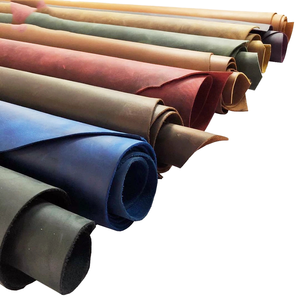
Crazy Horse Cowhide Split Italian Veg-Tanned Cow Skin
Vegetable-tanned structure with vintage burnishing capability, ideal for architectural upholstery and luxury accessories.
Review standard and custom full-grain formulations engineered with intensive paraffin wax penetration, pull-up chromatic elasticity, and high-frequency shielding.
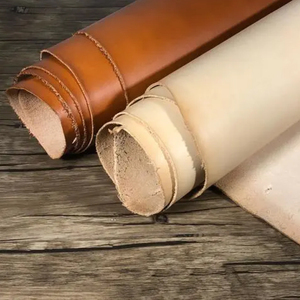
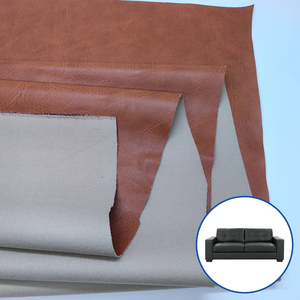
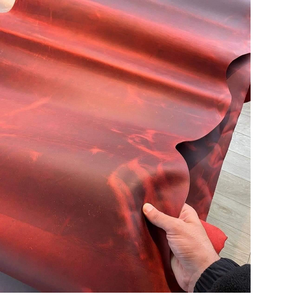
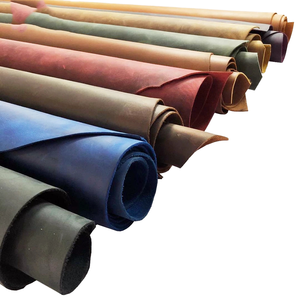
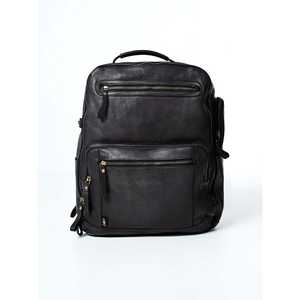
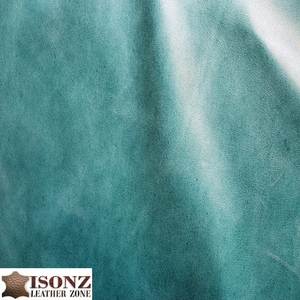
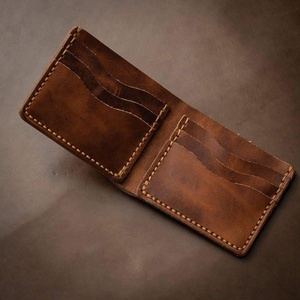
In global leather commodity trade, misleading terminology remains a primary risk vector for procurement departments. Despite its colloquial name, Crazy Horse leather is not equine leather; rather, it represents a specialized full-grain or top-grain bovine (cowhide) leather that undergoes a meticulous chemical finishing process. Originating historically in high-end saddle craft due to its friction resistance and moisture shedding, the material owes its distinctive character to an aggressive saturation of high-melting-point paraffin waxes and specialized oils applied directly onto the buffed or natural grain surface.
"Procurement directors must understand that Crazy Horse leather derives its value from the 'Pull-Up Effect'—an elastomeric optical displacement where structural oils shift beneath the collagen fiber bundles under tension, temporarily lightening the substrate color and producing organic, self-healing distress marks."
The manufacturing protocol executed by tier-one export tanneries differs fundamentally from standard pigment-coated nappa or corrected split leathers. After initial chromium or vegetable retannage, hides are drum-stuffed with a heated fatliquor blend. Once dried, precision roller coaters or hot-air spray lines apply liquefied microcrystalline waxes at temperatures exceeding 65°C. The wax penetrates down into the corium junction rather than forming a superficial barrier film. This distinct molecular structure yields exceptional properties:
To guard against product mismatch and customs discrepancies, buyers should review the structural differences among commercial grades prior to issuing formal RFQs:
| Substrate Grade | Fiber Density & Layer | Tensile Strength (ISO 3376) | Pull-Up Response | Ideal Application |
|---|---|---|---|---|
| Full-Grain Crazy Horse | Intact epidermis + papillary layer | ≥ 22.0 N/mm² | Extreme dynamic contrast | Luxury luggage, heritage boots, heirloom small leather goods |
| Top-Grain Buffed | Corrected upper corium | ≥ 18.0 N/mm² | Moderate, uniform color shift | Mid-market executive folios, commercial handbag lines |
| Vegetable-Tanned Suede Split | Reticular lower corium | ≥ 12.5 N/mm² | Subtle, matte-rubbed finish | Architectural paneling, decorative slipcases, accents |
| Oil-Waxed PVC Composite | Synthetic polymer with wax emulsion | ≥ 15.0 N/mm² (Warp) | Engineered optical shift | High-volume promotional products, vegan accessory lines |
Strategic analysis of technological shifts, sustainable compliance, and changing consumer appetites governing international supply contracts.
Global regulatory bodies (notably EU REACH and Deforestation Regulation EUDR) are steering procurement away from petroleum-derived paraffin wax toward certified soy, carnauba, and beeswax emulsion blends that lower VOC emissions during hot-stuffing drums.
The convergence of rugged vintage aesthetics with contactless data protection has made copper-nickel RFID attenuating fabric (shielding 13.56 MHz and 860-960 MHz bands) a baseline requirement for men's bifolds and passport travel accessories.
Traditional pull-up leathers suffered from wax and dye migration onto white apparel. Advanced chemical cross-linkers now stabilize lipid molecules within the hide structure, eliminating oil bleed without dampening the pull-up phenomenon.
Exporters are employing high-speed 3D optical surface scanners that trace pull-up tension flaws, grain breaks, and insect scars, letting CAD nesting software maximize cutting yields up to 88% on bespoke full-grain lots.
Glutaraldehyde and modified mimosa extract pre-tannages are achieving tear indices comparable to conventional wet-blue leathers, creating a new class of non-allergenic, compostable Crazy Horse leather lines tailored for pediatric and medical luxury sectors.
Product designers are actively pairing substantial 2.0mm Crazy Horse panels with featherweight microfiber linings and bonded nylon bonded-nylon threads (V-69 or V-92), reducing finished deadweight in luggage while retaining exterior patina longevity.
Founded in 1995, Naz Leather Export operates dual manufacturing facilities in Delhi, delivering predictable commercial terms, technical leather grades, and end-to-end export support.
We eliminate supply risk by explicitly indexing leather grades, caliper thickness tolerances (±0.1 mm), and oil saturation densities on official Proforma Invoices (GST: 07AGXPK0652P1ZN), ensuring retail compliance in US, UK, and EU customs jurisdictions.
Operating from Sadar Bazar and Motiya Khan workshops, our master pattern cutters render tech packs into production samples within 7 business days. We support blind embossing, laser engraving, bespoke brass hardware casting, and private label packaging.
With three decades of international freight experience across air and ocean logistics (FCL/LCL), we prepare comprehensive commercial invoices, detailed packing lists, Certificates of Origin, and generalized system of preference documentation for tariff minimization.
Clear, unhedged commercial and technical guidance addressing common hurdles in large-scale leather product manufacturing.
Authentic Crazy Horse leather naturally carries mobile surface waxes. For commercial apparel and interior upholstery collections, we apply an optional low-temperature sealing cycle that bonds free lipid molecules without impeding long-term patina formation or the signature pull-up effect.
Custom OEM product manufacturing starts at 100 units per style for small leather goods (wallets, pouches, passport covers) and 50 units per style for structured duffle bags, briefcases, and backpacks. Direct raw hide orders require 500 sq. ft. per bespoke dye-lot.
Yes. We source and machine solid brass, zinc alloy, and 304 stainless steel hardware finished in antique brass, brushed gunmetal, or matte black. All hardware options undergo 48-hour salt spray corrosion testing to ensure they will not degrade when contacting waxed leather.
Every production batch completes a 3-tier inspection: raw hide caliper and temper audit, in-line stitch tension and stress reinforcement checks, and finished piece evaluation against the signed golden sample. Clients are welcome to conduct third-party inspections (SGS/Bureau Veritas).
Initial prototyping requires 7-10 working days following tech pack sign-off. Bulk OEM manufacturing typically ranges between 20 and 35 working days following sample approval and deposit release, depending on total lot volume and hardware complexity.
We laminate high-density conductive metallic fabric (copper/nickel mesh) directly between the split lining and internal pockets. This maintains the supple hand-feel and natural exterior drape while effectively attenuating 13.56 MHz RFID and NFC frequencies.
Connect directly with our Delhi production engineering team to evaluate tech packs, request leather swatches, and lock in volume quotes for private label manufacturing.