
Explore eight core export-grade leather and technical polymer silhouettes, engineered with aerospace-grade hardware, hand-creased edges, and custom tooling capabilities for prestigious international marques.
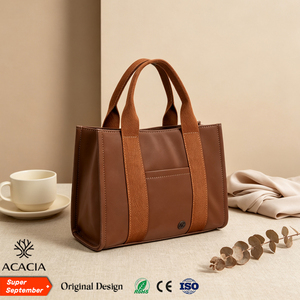
Ultra-dense microfiber composite with vintage oil-wax patina, burnished edge coating, and double-gusset luxury construction.
Examine Blueprint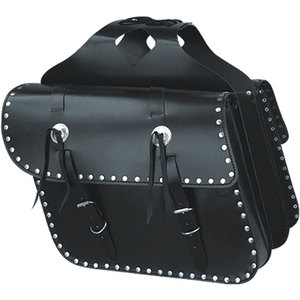
3.2mm structural vegetable-tanned bovine hide, zinc alloy riveted load bearing, weatherproof seam sealing, and reinforced studs.
Examine Blueprint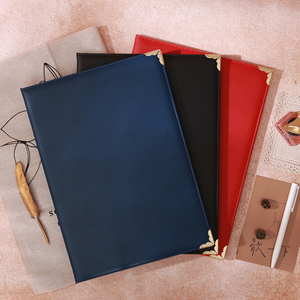
Foam-padded thermo-reactive leatherette, satin ribbon corner fixtures, archival-grade cardboard cores, and high-relief gold foil debossing.
Examine Blueprint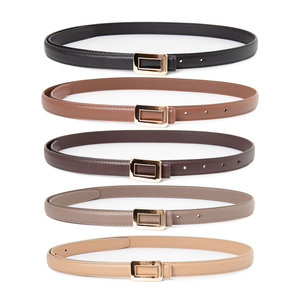
Full-grain single-cut Italian calfskin split, brushed alloy mechanical buckle, beveled hand-waxed edges, and 500-hour salt spray resistance.
Examine Blueprint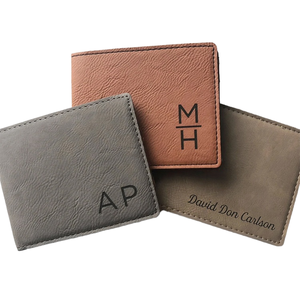
Precision-tuned carbonized top layer for ultra-sharp CO2 laser engraving, turned-edge card slots, and high-capacity dual currency dividers.
Examine Blueprint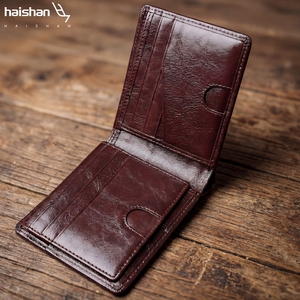
Hand-waxed vegetable crust leather, integrated German faraday-cage RFID shielding, TKT-40 bonded nylon thread, and reinforced thumb glide slot.
Examine Blueprint
Generous volume architecture in semi-aniline pebbled leather, padded laptop enclosure, 5-layer edge dye system, and cast-brass protective base feet.
Examine Blueprint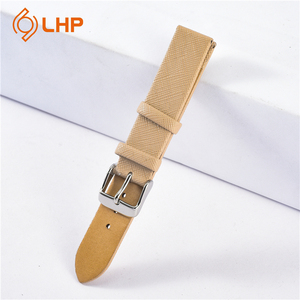
Hypoallergenic French Zermatt lining, waterproof embossed palm calfskin, quick-release surgical stainless steel spring bars, and saddle hand-stitching.
Examine BlueprintAs international luxury fashion houses, heritage equestrian purveyors, and high-growth direct-to-consumer (D2C) accessory labels optimize global supply chains, China’s leather manufacturing hubs have transformed. Moving beyond commoditized mass assembly, specialized regional clusters in Guangdong (Shiling, Huadu, Dongguan) and Zhejiang (Pinghu, Haining) now function as hyper-sophisticated, vertical ateliers capable of rivaling Florentine and Parisian master workshops.
When enterprise procurement executives evaluate a top China luxury leather goods exporter, the criteria extend far beyond floor space or piece-rate labor. Contemporary luxury contract manufacturing requires total vertical integration: from direct procurement of Leather Working Group (LWG) Gold-Rated bovine and ovine skins to automated computerized pattern skiving, laser-aligned stitch tensioning, and sustainable non-hazardous edge-finishing polymers compliant with the most stringent European Union REACH Annex XVII and California Proposition 65 directives.
Modern luxury brands no longer furnish finalized patterns and expect instant delivery. Rather, top-tier Chinese exporters function as design-for-manufacturing (DFM) collaborators. Our internal sample rooms evaluate paper tech packs for tensile stress tolerance, shear angles, structural interlinings, and hardware load vectors. By integrating computer-aided design (CAD) cutting systems alongside manual saddlery masters who possess decades of bench experience, we eliminate structural bottlenecks before full-scale manufacturing commences.
| Material Category | Structural Composition | Standard Application | Compliance & Certifications |
|---|---|---|---|
| Full-Grain Aniline Calfskin | Uncorrected epidermis, natural pore matrix, transparent vegetable/chrome tanning | Haute luxury executive satchels, heirloom luggage, bespoke watch straps | LWG Gold Rated, REACH Annex XVII, Prop 65 Lead <90ppm |
| Semi-Aniline Top Grain | Lightly buffed dermal layer, organic water-borne protective pigment coating | Daily commuter totes, high-wear designer handbags, corporate gift sets | ISO 14001, OEKO-TEX Leather Standard, SATRA TM31 |
| Bio-Based Microfiber Leather | Sea-island polyurethane microfibers with post-consumer recycled backing matrix | Vegan luxury fashion accessories, technical travel gear, diploma folios | GRS (Global Recycled Standard) 4.0, USDA Certified Biobased |
| Thermo-Reactive PU Leatherette | Calendered synthetic resin on brushed non-woven cotton or fleece substrate | Corporate stationery, hospitality presentation portfolios, seasonal packaging | RoHS Directive 2011/65/EU, Phthalate-free EN 71-3 |
This empirical clarity provides corporate buyers with the predictability required to safeguard their retail margins and protect customer trust in saturated global consumer markets.
Navigating the upcoming decade requires corporate merchandising departments to anticipate structural market transformations. Procurement directors can no longer purchase inventory purely against seasonal aesthetic calendars; sourcing strategies must align with regulatory mandates, digital consumer authentication, and ecological accountability.
Integration of near-field communication (NFC) silicon micro-tags and RFID faraday shields within structural gussets, providing EU DPP (Digital Product Passport) traceability and tamper-proof verification.
Replacement of heavy metal chromium salts with zeolites, olive-leaf extracts, and bio-circular tanning agents, cutting biological oxygen demand (BOD) in tannery wastewater by upwards of 42%.
Shifting from traditional cast-steel blank dies to ultra-high-speed oscillating CNC drag-knife cutting. This slashes prototyping turnaround times to 48 hours and facilitates dynamic MOQs down to 50 units.
Replacing conventional cyanide electroplating baths with Physical Vapor Deposition (PVD) titanium ceramic coatings, delivering up to 10x greater scratch resilience and 0% nickel release on metallic clasps.
As global regulations tighten—specifically the EU Corporate Sustainability Due Diligence Directive (CSDDD)—tier-one Chinese exporters are spearheading audited hide traceability, tracing bovine origin back to specific agrarian concessions to prevent deforestation risks across supply chains.
True luxury is identified by what remains invisible beneath the surface finish. Cheap knock-offs and promotional-grade commodities rely on heavy cardboard filler cores, water-based glues with high solvent degradation, and single-pass edge paint that cracks after three months of humidity cycling. Our export manufacturing facilities enforce strict industrial engineering controls throughout assembly.
A luxury leather tote or briefcase must maintain silhouette architectural integrity throughout decades of commercial use without becoming excessively rigid. We utilize custom calibrated interlinings: Salamander regenerated bonded leather fibers (Salpa) for pliable gussets, micro-cellular memory foams for handle core ergonomics, and non-woven tear-resistant micro-velours for interior partitions. Stress-bearing anchors, such as shoulder strap D-ring attachments, are reinforced with military-grade ripstop Kevlar tape stitched directly inside the dermal seams.
The hallmark of master luxury leathercraft is the painted edge. Rather than applying a single heavy layer of synthetic acrylic paint that forms an unsightly rubbery bead, our process follows an intensive five-stage protocol:
Our workshop floors combine German Dürkopp Adler compound-feed industrial sewing engines with classical saddle-hand-stitching techniques. Needle channels are set at an exact 45-degree slant, utilizing bonded polyamide continuous filament threads (sizes TKT 40 through TKT 15) lubricated with paraffin to eliminate heat fraying during high-speed sewing cycles. Thread tension is electronically metered across corners to avoid dermal puckering or grain cutting.
Since our foundational origins in 1995, our manufacturing enterprise has expanded across three continuous decades of international trade, servicing premier specialty retailers, department store consortia, and disruptive digital brands across North America, the United Kingdom, Western Europe, and the Middle East.
Every single batch undergoes stringent incoming raw hide spectrophotometer grading, mid-line assembly seam tension inspection, and 100% pre-carton white-glove manual finishing review.
Our dedicated internal testing laboratory features Bally flexometers, Veslic rub fastness machines, continuous zipper cycling jigs, and salt fog corrosion testing chambers.
Accommodating both established multinational distributors with 5,000-unit recurring monthly drops, and boutique launch capsules with minimum orders starting from 100 units per design.
Full bonded freight capabilities covering FOB Shenzhen/Guangdong, CIF Rotterdam/Hamburg, DDP Los Angeles/New York, with total provision of Generalized System of Preferences origin certifications.
We guarantee complete transparency: our proforma invoices stipulate the precise hide origin, thickness tolerance (±0.05mm), hardware alloy grade, and tensile resistance specifications in enforceable contract terms.
Direct answers from our senior engineering and export operations directors addressing practical operational considerations when commissioning luxury leather goods from China.
For custom OEM/ODM designs requiring proprietary hardware tooling or custom-dyed leather pantones, our baseline MOQ starts at 100 pieces per colorway for small leather goods (wallets, card cases, watch straps) and 50 pieces per style for complex silhouettes (large totes, briefcases, motorcycle luggage). For catalog silhouettes utilizing our existing master cutting dies, test orders of 50 to 100 units can be accommodated.
We provide absolute material transparency backed by contractual guarantees. Every proforma invoice specifies the exact tannery cut, hide origin (e.g., French Calf, American Steer, or Australian Bovine), thickness profile in millimeters, and finishing chemistry. Independent SATRA and SGS material testing reports detailing cross-sectional histological grain analysis can be furnished with pre-production lots.
Standard prototype turnaround requires 7 to 10 business days once CAD 2D/3D technical drawings and material swatches are confirmed. When custom zinc-alloy hardware casting dies or brass logo debossing stamps must be sculpted via 5-axis CNC machining, an additional 5 business days are allocated. Approved golden samples serve as the immutable benchmark for subsequent mass assembly line QC.
Our high-grade hardware fittings—including swivel trigger snaps, magnetic mortise locks, and buckle teeth—undergo a 48 to 96-hour continuous neutral 5% sodium chloride salt spray test (ASTM B117) to verify zero surface pitting. Furthermore, all electroplated coatings receive an electrophoretic lacquer or PVD seal guaranteed to surpass 500 hours of continuous human sweat exposure testing.
We orchestrate the entire customs documentation stack, including commercial invoices with itemized HS Code categorization (e.g., 4202.21 for leather handbags, 4203.30 for belts), detailed packing lists with volumetric weight calculations, Certificates of Origin (Form A, RCEP, or CO), and specialized declarations demonstrating zero presence of endangered wildlife species under CITES appendices.
We support independent third-party audits. Buyers can deploy SGS, Bureau Veritas, Intertek, or QIMA inspectors to our production facilities. Inspections follow ISO 2859-1 (AQL Level II Major 1.5, Minor 2.5) sampling criteria. Production batches failing to satisfy pre-agreed tolerances are subject to immediate rectification and re-inspection at factory expense prior to freight forwarder handover.
Connect directly with our senior OEM/ODM engineering desk. Discuss custom hide specifications, request physical material swatches, or submit your confidential CAD tech packs for comprehensive design-for-manufacturing (DFM) costing.