
Featured Export Catalog
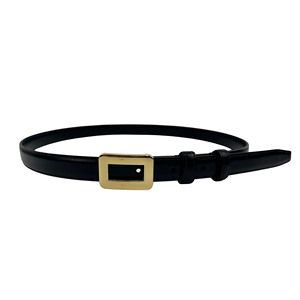
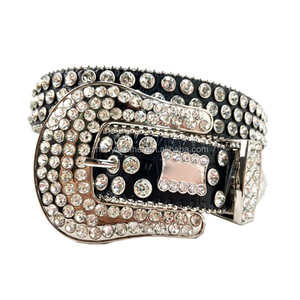
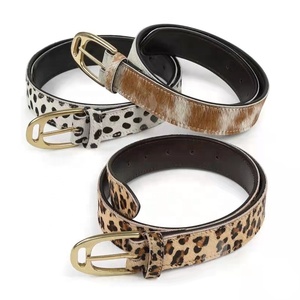
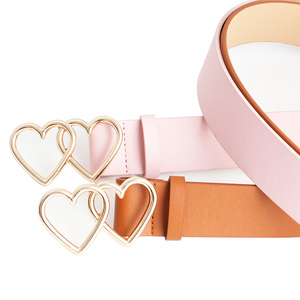
Curated Women's Leather Belts & Specialized Hardware
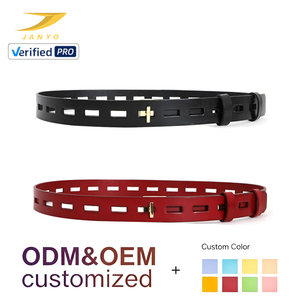
Precision-split full-grain hides, laser micro-perforations, and custom hypoallergenic zinc-alloy buckle assemblies ready for international wholesale and direct private-label rebranding.
Foundational Credentials
Industrial Manufacturing Pedigree & Factory Capabilities
Operating continuously since 1995 from Sadar Bazar and Rani Jhansi Road in Delhi, India, Naz Leather Export (GST: 07AGXPK0652P1ZN) represents an established authority in custom leathergoods export. Bridging ancestral Indian artisanal craftsmanship with modern enterprise throughput, our dual manufacturing units specialize in high-volume, precision-cut genuine leather belts, structured handbags, and RFID-protected accessories for leading brands across North America, the European Union, the United Kingdom, Australia, and the Middle East.
Unlike trading intermediaries, our integrated factory framework maintains sovereign control over hide selection, chemical processing compliance, precision splitting, computerized edge skiving, multi-layer oil edge coating, and final tensile calibration. Every production line is audited under strict international supply covenants, guaranteeing zero migration of banned aromatic amines, hexavalent chromium (Cr VI), or lead.
1995
Established Year
50+
Export Destinations
100 Pcs
Flexible MOQ Baseline
3-Stage
In-Line Quality Assurance
Grade Certification Guaranteed
Full-grain cowhide, buff harness leather, top-grain Nappa, and suede legally verified and specified on proforma invoices.
Direct OEM / Private Label
Laser etching, hydraulic hot foil stamping, custom branded tooling dies, woven labels, and bespoke luxury packaging.
Salt Spray Tested Hardware
Solid brass, custom electroplated zamak alloy, and stainless steel hardware engineered to withstand 72+ hours of ASTM B117 salt fog exposure.
Full Export Logistics
Seamless CIF/FOB/DDP terms with full commercial invoices, packing lists, Certificate of Origin (COO), and direct air/sea multi-modal freight.
Technical Whitepaper
Procurement Engineering & Substrate Anatomy Guide
A strategic breakdown of mechanical hide grading, cross-sectional anatomy, and quality verification standards for international commercial buyers.
In women's leather belt manufacturing, edge breakdown, layer delamination, and premature grain cracking remain the primary drivers of commercial returns. For high-volume fashion retailers, navigating raw hide nomenclature requires separating commercial marketing jargon from mechanical reality.
1. The Mechanical Hierarchy of Leather Substrates
A bovine hide is stratified into distinct structural layers: the upper epidermis grain layer, the junction tissue, and the underlying corium matrix. Understanding these boundaries governs structural performance:
- Full-Grain Bovine Hide: Retains the intact grain epidermis without buffing or snuffed correction. The dense collagen fiber bundles in this layer provide unyielding structural integrity and longitudinal tensile strength (averaging > 18 N/mm²). It develops a rich natural patina and resists surface fatigue around pin holes.
- Top-Grain Corrected Leather: The epidermis is lightly sanded to remove minor surface blemishes, then treated with a breathable polyurethane micro-pigment coat. While providing uniform visual finish across hundreds of thousands of units, its tensile threshold is slightly lower than unbuffed full-grain hides.
- Split / Genuine Suede: Derived from the lower corium layer after grain removal. In belt manufacturing, genuine split leather is laminated between face and lining layers, or pressed into fashion suede belts. Split leather must be calibrated with non-stretch core reinforcements to prevent longitudinal distortion during wear.
- Bonded Leather (Reconstituted): Shredded leather fibers bound with polyurethane emulsions. At Naz Leather Export, we strictly reject bonded leather for load-bearing strap applications, as its cohesive strength degrades rapidly under variable humidity.
2. Cross-Sectional Construction Frameworks
Selecting the cross-section structure determines the drape, rigidity, and shelf life of the belt:
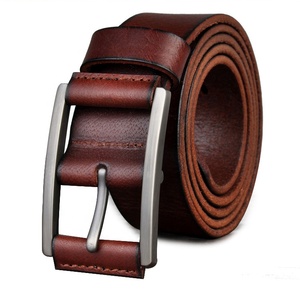
- Single-Strap Solid Cut (Raw / English Bridle): Cut from a single thick hide (3.2 mm – 3.8 mm), bevel-edged, and sealed with organic burnishing wax or vegetable tannins. Ideal for casual, western, and heritage styles.
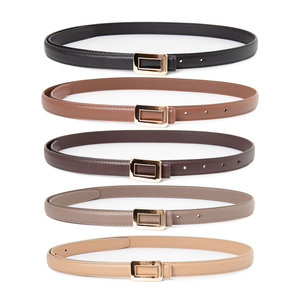
- Feathered & Lined (Three-Piece Architecture): Features a top-grain face leather (1.0 mm – 1.2 mm), a high-density non-woven or regenerated salpa core insert, and a genuine nubuck or nappa lining. Edges are folded over or hand-painted with high-viscosity edge dye. Essential for dress belts and high-end formal accessories.
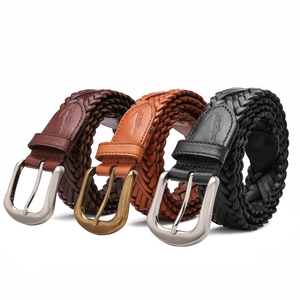
- Braided & Interwoven Assembly: Strips of chrome-tanned or veg-tanned leather precisely split to 0.8 mm are tension-braided by hand over flexible cores, ensuring tensile resilience with flexible waist conformity.
| Inspection Parameter | Export Benchmark Standard | Test Methodology | Commercial Relevance |
|---|---|---|---|
| Tensile Strength | ≥ 180 N (Skinny) / ≥ 350 N (Standard) | ISO 3376 / ASTM D2209 | Prevents pin-hole elongation and strap breakage. |
| Edge Paint Adhesion | 500 Cycles Taber Abrasion / No Peeling | SATRA TM160 | Stops thermal tackiness and cracking in humid storage. |
| Hardware Corrosion | Grade 10 (Zero pitting at 72 Hrs Salt Fog) | ASTM B117 / ISO 9227 | Protects shiny gold, brass, and alloy hardware against tarnish. |
| Flex Fatigue Resistance | 50,000 Flex Cycles at 20°C (Zero cracks) | Bally Flexometer / ISO 5402 | Guarantees flexibility around buckle loops and belt keepers. |
| Azo Dyes & Chromium VI | Non-Detectable (< 3 ppm limit) | DIN EN ISO 17075 / REACH Annex XVII | Ensures legal market access across the EU, US, and UK. |
Strategic Forecast
Future Sourcing & Procurement Trends (2026–2030)
Key market shifts shaping supply chain diversification, regulatory audits, and consumer purchasing patterns.
Traceable Supply Chains (EUDR & LWG)
By late 2025 and 2026, the European Deforestation Regulation (EUDR) will require full geo-location farm tagging for bovine hides. Sourcing from Leather Working Group (LWG) certified tanneries is transitioning from a CSR preference to an absolute border customs prerequisite.
Metal-Free & Bio-Tanned Hides
Consumer demand for circularity is driving adoption of zeology, olive-leaf, and vegetable aldehyde tanning systems. These methods yield supple, biodegradable strap leathers free of synthetic chromium salting while preserving deep, natural grain character.
Modular Hardware & Reversible Systems
Driven by e-commerce SKUs requiring versatility, dual-side rotatable buckles and snap-interchangeable buckle mechanisms are expanding rapidly. Retailers maximize margin by presenting two distinct colorways within a single SKU footprint.
Design Direction
Product Development Trends: Silhouette & Hardware Innovations
Key aesthetic developments shaping upcoming retail assortments.
Micro-Skinny vs. Sculpted Corset Extremes
Market demand is bifurcating. On one end, 12 mm to 15 mm ultra-skinny belts with minimal hardware pair cleanly over blazers. On the other, 60 mm to 90 mm waist-sculpting cinchers with ergonomic curves define tailored dresses.
Organic Hardware & Brushed Metals
High-gloss mirror finishes are giving way to sculpted, irregular organic profiles: molten gold textures, antique matte brass, brushed pewter, and gunmetal finishes coated with durable electrophoresis clear varnishes.
Intricate Laser Cutouts & Western Details
Laser cutouts, brogue punch accents, and hollow filigree patterns allow multi-tonal underlays to show through. Paired with engraved western stirrups and keeper sets, these details deliver elevated perceived value at direct factory price points.
Buyer Knowledge Base
B2B Sourcing FAQ for Importers & Procurement Teams
Direct answers to technical questions on factory capabilities, production runs, compliance testing, and trade workflows.
What are your exact factory MOQs for custom OEM women's leather belts?
For custom OEM/ODM production runs, our typical baseline is 100 pieces per style/colorway for women's leather belts, and 50 pieces per style for leather bags. If selecting stock catalog colors or standard hardware molds, lower initial trial runs (100–200 units total) can be arranged to support direct market testing.
How do you guarantee and certify genuine leather grades on bulk shipments?
Every production contract and proforma invoice explicitly specifies the exact leather grade: Full-Grain Bovine, Top-Grain Corrected, Buff Harness, or Split Suede, alongside calibrated thickness (e.g., 2.8 mm – 3.2 mm ± 0.1 mm). We provide formal raw material batch certificates, and our workshop welcomes accredited third-party inspections (SGS, Intertek, TÜV) prior to final balancing payments.
What are your standard turnaround times for sampling and bulk export manufacturing?
Counter-sample prototyping and tech pack execution typically require 7 to 10 business days. Upon physical sample sign-off and receipt of production deposit, bulk industrial manufacturing requires 20 to 35 working days depending on hardware electroplating lead times and order complexity.
Do metal buckles, rivets, and hardware meet international chemical compliance standards?
Yes. All metal hardware components—including zinc-alloy casting, solid brass, and stainless steel pins—are certified compliant with EU REACH Regulation (EC No 1907/2006) for nickel release, lead safety, and cadmium content, as well as California Proposition 65 standards. Salt spray testing documentation is available on demand.
What private-label branding techniques can you execute in-house?
Our facilities handle blind thermal debossing, micro-foil stamping (metallic gold, silver, rose gold), laser engraving on hardware buckles, customized branded edge stitch codes, woven labels, branded hangtags, and bespoke rigid gift box packaging with anti-humidity silica packing.
What payment terms and logistics document sets are provided for overseas importers?
For initial orders, terms are typically 50% advance via T/T wire transfer and 50% prior to dispatch against pre-shipment photo/video inspection reports or independent third-party inspection sign-off. Established repeat buyers are eligible for Irrevocable LC at Sight. We prepare complete customs clearance documentation including Commercial Invoices, Packing Lists, airway bills/bills of lading, and Certificates of Origin.
Can you manufacture RFID-blocking leather accessories within the same production cycle?
Yes. For brands developing synchronized capsule collections (belts, matching wallets, clutches, and cardholders), we incorporate certified flexible Faraday fabric interlinings blocking 13.56 MHz frequencies, verified across all RFID-shielded card slots.