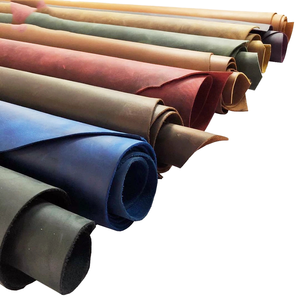
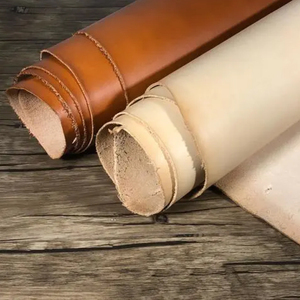
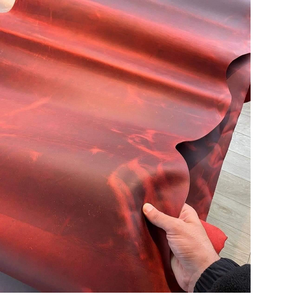
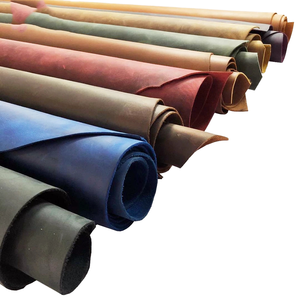
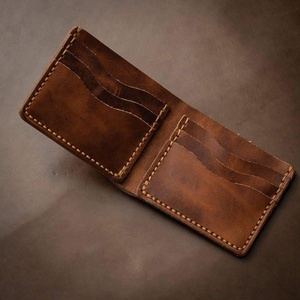
Crazy Horse leather is frequently misunderstood in non-specialized supply chains. Contrary to colloquial consumer assumptions, it is not derived from equine hides. It represents an intricate metallurgical and chemical finishing process applied to premium, hand-selected bovine hides—predominantly full-grain or premium split cowhide. The distinguishing mechanical hallmark of genuine Crazy Horse leather is its spontaneous pull-up effect.
During the retanning stage, the fiber matrix of the hide is impregnated with heavy blends of natural stearic animal tallow, microcrystalline petroleum waxes, and hydrophobic vegetable oils. When the leather is creased, stitched, stretched, or burnished during industrial cutting and assembly, these embedded waxes migrate internally across microscopic fibrous bundles. This generates a striking, luminous chromatic variance where the creased zone lightens in hue, revealing an immediate antique, rustic patina that naturally burnishes back over time.
The European CE & REACH Imperative for Vietnam's Free Trade Zones: Under the EU-Vietnam Free Trade Agreement (EVFTA), OEM factories located throughout Ho Chi Minh City, Bình Dương, and Đồng Nai export finished leather goods directly into the European Union tariff-free. However, this demands stringent, verifiable laboratory conformity: Hexavalent Chromium [Cr(VI)] content must remain strictly non-detectable (<3 ppm under ISO 17075-1), zero banned azo colorants, and tight limits on short-chain chlorinated paraffins (SCCPs). Our CE-certified batches fulfill every REACH chemical threshold while delivering certified mechanical tear resistance.
In high-speed robotic leather cutting facilities common to modern industrial parks in Vietnam, leather uniformity is paramount. Natural hides with uncalibrated stretch, inconsistent thickness tolerances, or loose belly flanks cause knife jams, optical scanning errors, and excessive offcut waste. We grade and process whole cattle hides using laser-guided thickness skiving machines, calibrating hide flanks within strict ±0.1mm tolerances across the entire cutting surface.
Furthermore, Crazy Horse leather engineered for tropical manufacturing climates—specifically the elevated atmospheric humidity typical of southern Vietnam—requires specialized antifungal lipidic lubrication. Untreated standard wax mixtures can suffer from fatty spue (blooming of free fatty acids manifesting as white crystalline haze) or accelerate mold spore germination under container transit conditions through the South China Sea.
Our formulation incorporates proprietary food-safe biostatic anti-mold barriers during the final wax thermal immersion pass. This guarantees that whether raw hides or fully boxed OEM bags remain in transit or warehouse storage in Hai Phong port for weeks, the wax surface stays stable, clear, and fragrant without moisture degrade.
| Mechanical / Chemical Metric |
CE Industry Standard |
Naz Leather Export Benchmark |
| Chromium VI (Hexavalent) |
< 3.0 mg/kg (ISO 17075) |
Not Detected (< 1.0 mg/kg) |
| Ball Burst / Grain Crack |
≥ 7.0 mm depth (ISO 3379) |
≥ 9.4 mm average |
| Tear Strength (Baumann) |
≥ 40 N/mm (ISO 3377-2) |
≥ 68 N/mm (Heavy Bullhide) |
| Veslic Rub Fastness (Dry) |
500 cycles / Grade 3-4 |
1,000 cycles / Grade 4-5 |
| Veslic Rub Fastness (Wet) |
50 cycles / Grade 3 |
150 cycles / Grade 4 |
| Formaldehyde Content |
< 75 mg/kg (ISO 17226) |
Zero Added (< 15 mg/kg) |