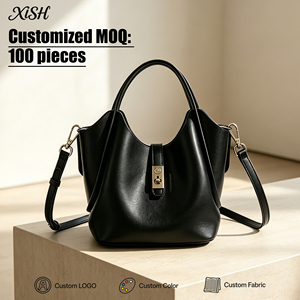

Engineered to meet stringent Japanese quality inspections (検品 - Kenpin), our CE-marked slim leather product lines combine ultra-compact architectures with robust anti-skimming performance.
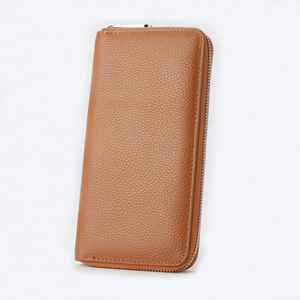
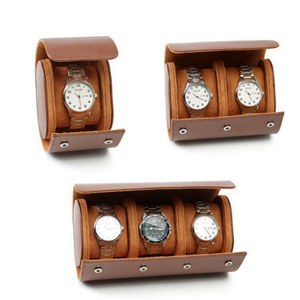
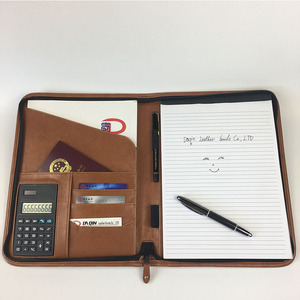
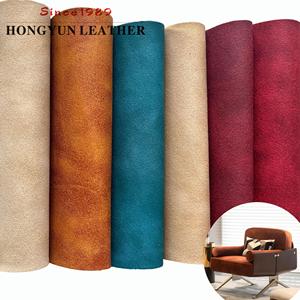
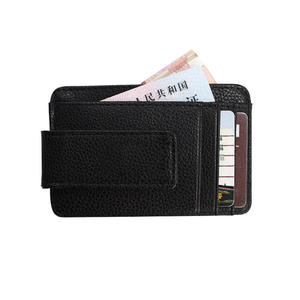
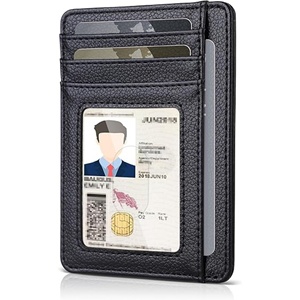
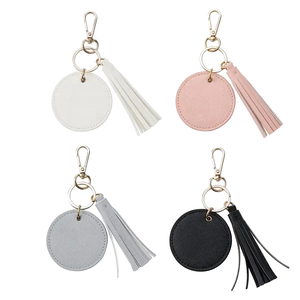
The Japanese consumer leather goods market operates under uniquely demanding technical specifications. Following the rapid rise of "Cashless Japan" initiatives alongside the enduring cultural reverence for immaculate leather craftsmanship, Japanese procurement offices demand micro-millimeter precision, sustainable compliance, and dual-function security architectures. Exporting to Tokyo, Osaka, and Nagoya requires manufacturing plants to transcend generic leathercraft and integrate certified technical tolerances.
As an established manufacturing partner since 1995, our Delhi facilities fuse authentic Indian tanneries' tensile-rich full-grain cowhides with CE-certified electromagnetic compatibility (EMC) attenuation barriers. We systematically address the Japanese market's distinct lifestyle requirements—such as compatibility with Japanese Yen bill dimensions (160mm × 76mm for 10,000 Yen notes), contactless transit systems (Suica/Pasmo), and stringent tactile standards that reject edge cracking, uneven stitching, or chemical malodors.
Designing modern leather goods for the Japanese consumer landscape necessitates deep integration with everyday municipal routines, transit systems, and corporate etiquette.
Commuters navigating Tokyo’s Yamanote line require instant IC Card (FeliCa RFID, 13.56 MHz) readouts at turnstiles without interference from credit cards. Our dual-shielded architecture embeds high-permeability ferrite barrier foils that allow an external transit pocket to register with ticket gates while simultaneously isolating interior financial credit cards behind a 60dB RF attenuation layer.
Traditional Japanese corporate norms place supreme weight on the condition of paper money and business cards. Our hybrid slim bi-folds incorporate dedicated flat bill sleeves engineered specifically to prevent folding or creasing the pristine 10,000-yen note, paired with reinforced chamfered card slots that eliminate card distortion during client-facing exchanges.
Despite the rapid adoption of smartphone QR pay systems like PayPay, automated Japanese vending machines and temple donation shrines still require physical coinage (100 and 500 Yen coins). Our Japanese market models feature an ultra-flat origami gusset coin tray that collapses to an absolute 4mm profile when empty, avoiding the bulky, unsightly silhouette typical of Western coin pouches.
Analyzing key structural shifts shaping small leather goods sourcing strategies among department stores and multi-brand select shops.
Japanese retail demand peaks predictably around celestial fortune calendar dates (Tensha-nichi). Major department stores stock minimalist green and camel wallets to meet these synchronized surges, requiring supply partners capable of rapid batch replenishments.
Urban lifestyle shifts toward compact shoulder totes and sling pouches have forced traditional bulky long wallets out of standard everyday carry. Japanese retailers now favor card-centric architectures under 8mm in overall thickness.
B2B buyers increasingly align procurement with eco-conscious standards. Tanneries supplying raw hides must verify heavy-metal-free vegetable tanning processes, azo-dye bans, and zero chromium-VI conversion under humid storage environments.
Japanese buyers enforce zero-tolerance metrics regarding edge seal cracking under temperature swings. Utilizing flexible polyurethane Italian polymers applied across four coats prevents structural peeling under high monsoon humidity.
Combining 30 years of artisan manufacturing history in Delhi, India with precision export engineering, rigorous certification standards, and end-to-end transparency.
Unlike workshops using untracked conductive fabrics, our RFID/NFC shielding materials pass rigorous test benchmarks under EN 55032 and EN 301 489 directives. Every shipment provides audited laboratory attestation confirming attenuation ratings exceeding 99.9% across the primary commercial frequency bandwidths (13.56 MHz RFID, 860-960 MHz UHF).
We eliminate buyer risk by specifying exact hide grades directly on our proforma invoices—guaranteeing whether an order uses authentic full-grain, buff-calf, or top-grain split leather. Hides are inspected for thickness uniformity, stretch resilience, and tensile stability before cutting lines open.
Operating across our Sadar Bazar primary facility and Motiya Khan secondary plant, each batch undergoes a three-step internal auditing gate: raw-hide chemical and moisture balancing, in-line edge burnishing inspection, and 100% pre-packaging needle-detection and dimensional verification.
Clear, direct answers regarding custom tooling, testing accreditations, shipping logistics, and compliance protocols.
CE compliance confirms electromagnetic barrier validation across 13.56 MHz and 860-960 MHz bands without deploying hazardous plasticizers or phthalates. While Japanese domestic retail does not strictly mandate a CE seal for passive leather goods, having accredited CE laboratory test reports streamlines customs entry through Tokyo/Kobe and provides local trading houses (Shosha) with verified anti-counterfeiting and safety documentation.
Initial counter-samples typically take 7 to 10 working days once your CAD designs or tech packs are signed off. Mass production runs generally require 20 to 35 working days following sample approval and deposit confirmation. We routinely handle scheduled multi-drop shipping via air freight to Haneda/Narita or consolidated sea containers to Yokohama and Osaka.
Yes. European and American paper currency is narrower than Japanese banknotes (which measure up to 160mm × 76mm for 10,000 Yen denominations). We custom-engineer interior bill sleeves to a calibrated length of 172mm–178mm, ensuring cash can slide in and out smoothly without folding or catching on perimeter stitching.
Meeting Japanese import compliance requires absolute zero broken metal contamination. Finished wallets pass through automated conveyor needle detection systems calibrated to detect ferrous particles down to 0.8mm. Test certification logs are provided alongside the export commercial invoice and packing manifests.