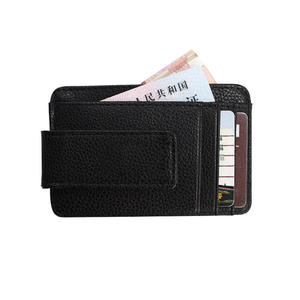
Explore eight core designs developed with ultra-thin profiles, certified RFID shields, and refined edge treatments tailored to Japan's Chukyo metropolitan lifestyle.
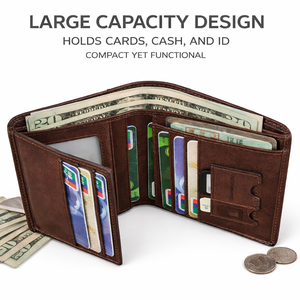
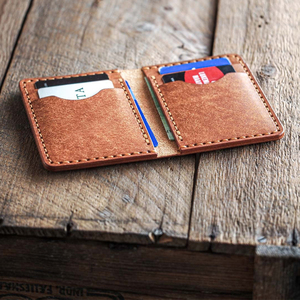
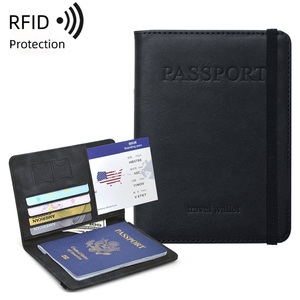
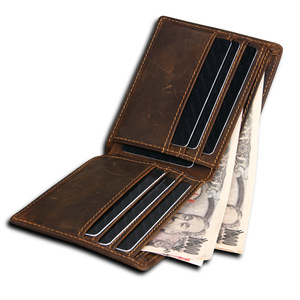
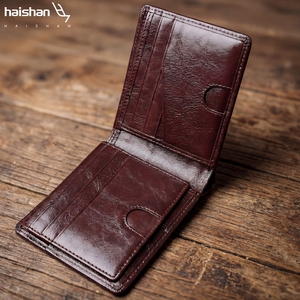
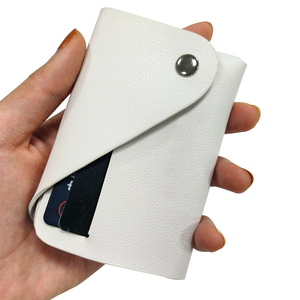
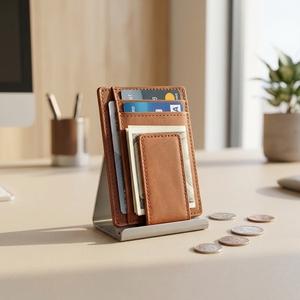
In the highly discerning retail landscapes of Nagoya—spanning prominent department store flagships along the Hisaya-odori in Sakae to luxury hubs at JR Central Towers and the sprawling underground concourses of Meieki—leather goods are judged by unforgiving metrics. Japanese consumers demand flawless material integrity, microscopic stitch consistency, flawless edge-finishing (コバ塗り / Koba-nuri), and absolute dimensional symmetry.
For procurement directors, corporate merchandise managers, and independent leather labels throughout Aichi Prefecture, partnering with a premier Chinese leathergoods manufacturing facility bridges the critical divide between competitive unit economics and uncompromising Japanese industrial craftsmanship (Monozukuri / モノづくり). Leveraging over three decades of export-grade production capabilities, our manufacturing facilities execute high-precision cutting, skiving, assembling, and needle detection to provide turn-key OEM and ODM lines perfectly suited for Japanese commercial distribution.
Nagoya retail buyers exhibit distinct aesthetic preferences. While Tokyo tends to cycle rapidly through fast-fashion silhouettes, the Chukyo metropolitan zone balances traditional luxury durability with everyday practical ergonomics. We maintain certified raw material sourcing across multiple verified leather tiers:
Uncorrected dermal structure that absorbs natural oils over time, creating the rich, authentic patina (経年変化 / Keinen henka) deeply prized by Japanese leather connoisseurs and boutique leather ateliers across Osu and Sakae.
Treated with micro-crystalline waxes and specialty oils to provide a shifting marbled effect upon manipulation. Ideal for rugged travel goods, money clips, and everyday-carry accessories that resist water and daily desk friction.
Ultra-thin 0.5mm-to-0.7mm skived skins with fine grain profiles, engineered for structured executive bi-folds and continental card cases that fit unobtrusively into bespoke business suits without warping jacket lapels.
Understanding the exact situational context of the end-user is critical for accurate OEM tech-pack engineering. In Nagoya, leather goods navigate specific daily operational ecosystems:
Commuting professionals transitioning between Nagoya Station, Kanayama, and the automotive/industrial headquarters across Toyota City or Kariya require streamlined access to contactless transit media. Wallets must seamlessly integrate an external, non-shielded quick-access slot for the regional Manaca (マナカ) or TOICA smart cards, while insulating inner compartments with 13.56 MHz anti-skimming Faraday fabrics to secure contactless credit cards and corporate security badges.
Aichi Prefecture is the industrial heartbeat of Japan. Corporate procurement teams frequently commission bespoke leather wallet and business card case (名刺入れ / Meishi-ire) gift sets for supplier conferences, executive retirements, and client milestones. These units demand precision blind-embossing (素押し) or discreet foil-stamped corporate insignia, accompanied by Japanese-standard paulownia-wood boxes or matte-laminated rigid paper gift boxes with silk-touch dust jackets.
Department store buyers at retail institutions such as Matsuzakaya Nagoya, JR Nagoya Takashimaya, and Meitetsu Department Store enforce rigorous aesthetic checklists before approving shelf space. Every wallet must exhibit uniform 7-to-8 stitch-per-inch precision with bonded nylon or polyester filaments, completely free from stray thread tails, glue residue, or asymmetric fold creases. Edge-dye treatments must withstand Japanese climatic transitions without peeling, tackiness, or micro-cracking.
Historically known as an intensely cash-reliant economy, Japan has undergone an aggressive digital transformation over recent years. Government cashless initiatives and the ubiquitous proliferation of Pay-Pay, Apple Pay, and contactless IC cards have radically altered consumer ergonomics. This shift directly informs our manufacturing R&D pipelines:
Bulky tri-fold bills and thick long wallets are increasingly being replaced by palm-sized silhouettes (under 95mm x 85mm) capable of holding 4-6 cards, a folded emergency ¥10,000 banknote, and an ultra-flat coin gusset.
Rather than shielding the entire exterior shell, modern Japanese designs require selective frequency filtering. Inner currency and credit sleeves remain fully shielded, whereas an exterior transit pocket permits 13.56 MHz RFID passthrough to prevent barrier gate errors.
Traditional metal clips are evolving into integrated magnetic closures and leather-wrapped high-tensile steel springs, allowing sleek bill retention combined with low pocket wear and tear on formal wool trousers.
To assist Nagoya sourcing managers in establishing ironclad Purchase Order (PO) specifications, review our standard factory threshold matrix:
| Inspection Parameter | Export Benchmark for Japan | Testing & Manufacturing Protocol |
|---|---|---|
| Needle Detection (検針) | 0.8mm Ferrous Ball Detection Baseline | Dual-head conveyorized Hashima needle detectors prior to packaging; mandatory zero-tolerance pass. |
| Edge Finish (コバ仕上げ) | Multi-coat polymer lacquer, hand-sanded | Triple application with intermittent 400-grit fine sanding; passes 10,000-cycle flex tests at -10°C to 40°C. |
| Stitch Consistency | 7.5 – 8.0 Stitches Per Inch (SPI) | Computer-controlled Juki programmable sewing machines with precision edge-guide tracking. |
| Skiving Tolerance (漉き加工) | ±0.05 mm Thickness Consistency | Fortuna computerized skiving heads preventing localized pocket bulge across multi-layered card slots. |
| Chemical Compliance | Zero Hexavalent Chromium / Formaldehyde <75ppm | JIS L 1041 and REACH compliant tanning formulations; odorless water-based non-toxic adhesives. |
| RFID Attenuation | > 60 dB attenuation at 13.56 MHz / 125 kHz | Laminated nickel-copper alloy textile barrier integrated between outer hide and internal twill lining. |
Selecting an offshore manufacturing partner requires verified operational stability, institutional heritage, and strict compliance execution. Originating as a specialized leathergoods workshop founded in 1995, our manufacturing enterprise integrates traditional leatherworking artistry with modernized industrial production management.
Quality control does not occur at the shipping dock—it is embedded into every operational step:
Whether you supply complete CAD drawings, a physical reference sample purchased in Japan, or a conceptual design sketch, our bilingual engineering team rapidly translates your requirements into production-ready pattern dies, brass embossing blocks, and custom die-cast zinc alloy or solid brass hardware finishes.
We routinely manage export documentation—including Commercial Invoices, Packing Lists, Certificates of Origin (allowing our Japanese clients to leverage EPA/RCEP preferential tariff rates), and custom barcode labelling for automated warehouse intake. Shipments are consolidated and dispatched directly via sea freight to the Port of Nagoya (名古屋港) or expedited via air freight to Chubu Centrair International Airport (NGO) within predictable 4-to-7 day transit windows.
Critical operational answers regarding MOQs, needle inspection certificates, lead times, and customs clearance protocols for buyers based in Nagoya and broader Japan.
In the Japanese retail market, needle detection is an absolute non-negotiable legal and consumer safety standard. Every single wallet, card holder, and coin pouch produced in our facility passes through an industrial conveyorized Hashima needle detection machine calibrated to detect broken steel fragments as small as 0.8mm ferrous particles. We supply a formal Needle Detection Certificate alongside the pre-shipment inspection dossier.
For custom OEM designs requiring specialized tooling (custom embossing dies, bespoke hardware molds, or unique dimensional cuts), our starting MOQ is typically 100 to 200 pieces per style/colorway. For orders utilizing in-house catalog patterns with customized logo stamping and bespoke gift packaging, we can frequently accommodate test batches of 50 to 100 pieces to assist brands with regional market validation in Nagoya.
Japan experiences significant seasonal humidity shifts—from sultry summer rains to crisp, arid winters. Standard edge paints can turn brittle or sticky under these conditions. We utilize premium, flexible Italian and Japanese water-based polyurethane edge polymers engineered with high elasticity thresholds that withstand thermal and flex testing from -15°C to 45°C without delamination or surface tackiness.
Yes. While we stock an extensive range of premium imported European and domestic top-grade cowhides, we routinely operate under "Cut, Make, and Trim" (CMT) arrangements. Japanese clients frequently arrange direct bonded shipments of specialized tanned hides from Himeji or Tochigi to our factory for precision high-volume manufacturing, skiving, and assembly.
Under the Regional Comprehensive Economic Partnership (RCEP) framework between China and Japan, leathergoods can qualify for preferential tariff reductions when supported by compliant documentation. Our compliance department prepares complete RCEP Certificates of Origin and detailed material breakdowns to ensure your customs brokers in Nagoya Port process clearance smoothly without tariff penalties.
Physical sample prototyping typically requires 5 to 7 business days following tech-pack confirmation. Upon final golden sample sign-off and PO issuance, standard bulk production runs approximately 20 to 30 working days depending on order volume. Ocean freight from our coastal logistics terminals directly into Nagoya Port adds approximately 3 to 5 days, while air freight to Chubu Centrair takes 24 to 48 hours.
We provide a comprehensive array of branding techniques suited for minimalist Japanese aesthetics: hot blind debossing (素押し), precision gold/silver metallic foil stamping (箔押し), micro-laser engraving on metal hardware, custom-molded high-density metal zipper pulls, and interior woven silk or printed twill brand labels.
Japanese department stores reject products with harsh chemical or solvent odors. We employ certified water-soluble, low-VOC contact adhesives and ensure that all tanned hides undergo thorough degreasing and mild neutral conditioning. Every finished batch is air-cured in climate-regulated clean rooms prior to silica-gel desiccant insertion and individual bagging.